


Should You Waterproof Before Finishing Your Basement?
Planning to turn your basement into a cozy living space? Whether it’s a home office, family entertainment area, or extra bedroom, there’s one crucial step homeowners in the St. Louis area can’t afford to skip:
Basement Waterproofing
At Perma-Jack of St. Louis, we’ve seen time and time again what happens when this step is overlooked—mold behind freshly painted drywall, buckled flooring, musty odors, and costly tear-outs. Before you commit to carpet and drywall, consider whether your investment will be better protected with a waterproofing system.
Why Waterproofing Comes First
Even if your basement “seems dry,” water has a sneaky way of getting in. Without proper protection, moisture can seep through:
- Cracks in foundation walls or floors
- The cove joint (where the wall meets the floor)
- Saturated soil pressing water through concrete via hydrostatic pressure
- Poor grading or clogged gutters directing water toward your home
Once you’ve finished the space, identifying and accessing the source of a leak becomes far more difficult—and expensive. Moisture intrusion can destroy insulation, bubble paint, warp flooring, and create the perfect environment for mold growth and air quality issues.
Warning Signs You May Already Need Waterproofing
- Damp spots or water stains on walls and floors
- White chalky residue (efflorescence)
- Peeling paint or bubbling drywall
- A musty smell or visible mold
- Cracks in walls or the floor
- Water pooling during or after rainstorms
What Does Basement Waterproofing Involve?
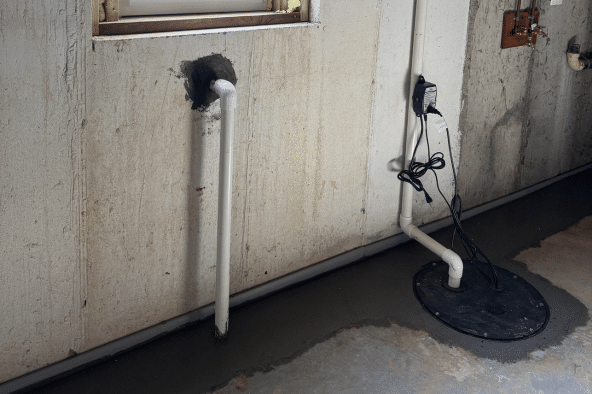
- Interior drainage systems that capture water and direct it to a sump pump
- Sump pump installations or upgrades with battery backups for reliability
- Wall and floor crack repairs using high-grade structural sealants
- Vapor barriers and moisture-resistant wall systems
- Ventilation or dehumidification systems to regulate humidity
This work is done before any interior walls go up—so your basement stays protected from the inside out.
Why Waterproof Paint Isn’t Enough
Think slapping on a coat of waterproof paint is all it takes? Think again.
While it might mask the symptoms temporarily, it does nothing to stop groundwater from forcing its way in. Over time, hydrostatic pressure will find its path—usually behind your walls and under your floors. Don’t rely on short-term fixes when long-term protection is what your home really needs.
What About Egress Windows?
If you’re adding a bedroom, St. Louis County building codes require an egress window—a window large enough to serve as an emergency exit. But here’s the thing:
Egress windows are a major point of water intrusion if not installed and sealed properly. At Perma-Jack, we offer egress window installation that integrates with our waterproofing systems. That means your window wells will include proper drainage, sealing, and support—ensuring you meet code without compromising your basement’s dryness.
Code Compliance Tip: St. Louis County and most municipalities follow the International Residential Code (IRC), which mandates that any basement sleeping area have an egress window with a minimum opening of 5.7 square feet, and a maximum sill height of 44 inches from the floor. Waterproofing around these openings is critical to meet both code and comfort standards.

Benefits of Pre-Finishing Waterproofing
- Long-term peace of mind knowing your investment is protected
- Better indoor air quality by reducing mold, mildew, and allergens
- Increased resale value—buyers love finished basements that are up to code and moisture-free
- Savings on future repairs—you won’t be ripping out drywall to fix preventable leaks
Ready to Finish Your Basement? Call Perma-Jack First
Don’t risk turning your dream space into a disaster zone. At Perma-Jack of St. Louis, we provide comprehensive basement waterproofing and code-compliant egress window installations—so you can finish your basement confidently and correctly.
Contact Perma Jack of St. Louis today for a basement inspection and personalized waterproofing recommendation.