


Google Reviews Perma Jack of St. Louis
BBB A Rated

Call Us Today

Foundation Repairs We’ve Recommended That Didn’t Involve Piers

When homeowners hear the words foundation repair, many immediately picture large excavation projects, steel piers, and expensive structural work. The reality is often very different.

At Perma Jack of St. Louis, we’ve inspected thousands of homes, and one thing we’ve learned is that not every foundation problem requires foundation piers. In fact, there are many situations where a less invasive repair is the right solution because it addresses the actual cause of the problem instead of treating every issue the same way. Our goal has never been to recommend the biggest repair. It’s to recommend the right repair.

Foundation Problems Don't All Have the Same Cause

One of the biggest misconceptions homeowners have is that every crack or sign of movement means the foundation is sinking. Sometimes that’s true. But we’ve also inspected homes where the primary issue was poor drainage, hydrostatic pressure, a leaking foundation crack, or normal settlement that had already stabilized years ago.

The visible symptom is only one piece of the puzzle. Before recommending any repair, we want to understand why the problem developed and whether it’s still changing. That starts with a thorough inspection of both the interior and exterior of the home.

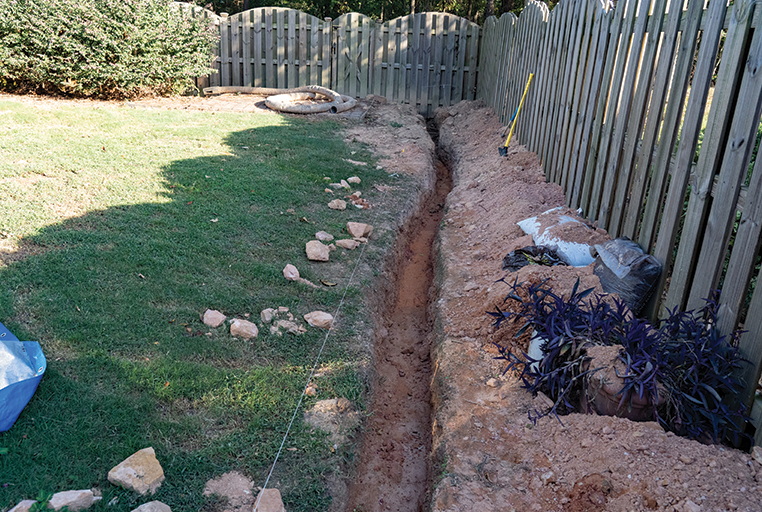
Yard French Drain

Sometimes the Best Recommendation Is Better Drainage

One of the most common recommendations we make has nothing to do with underpinning the foundation. Instead, it involves improving how water moves around the home. We've inspected properties where downspouts discharged directly beside the foundation, grading directed water toward the basement, or years of roof runoff had saturated the surrounding soil. Those conditions can increase hydrostatic pressure, contribute to settlement, and create basement water problems over time.

Correcting the drainage doesn't just help keep the basement dry. It also helps create more stable soil conditions around the foundation, reducing one of the biggest contributors to long-term movement. One thing we've found over the years is that managing water is often one of the most effective ways to protect a home's foundation.
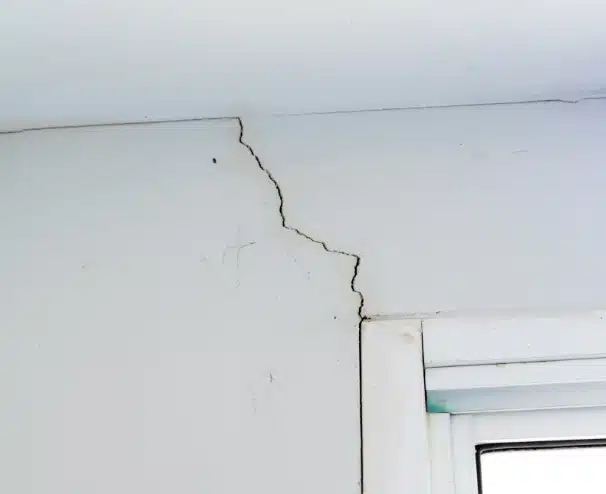
Sometimes We Recommend Monitoring

Homeowners are often surprised when we tell them a foundation doesn’t need immediate repair. Not every crack is active, and not every home continues settling indefinitely. We’ve inspected homes where small settlement cracks had remained unchanged for many years. The homeowners expected us to recommend structural repairs, but after evaluating the foundation, drainage, and overall condition of the home, monitoring was the most appropriate recommendation.

That doesn’t mean ignoring the problem. We encourage homeowners to keep an eye on cracks, document any changes, and schedule another inspection if they notice additional movement. Sometimes the best decision is allowing the home to tell us whether anything is actually changing.

bowed wall crack

Sometimes Foundation Crack Repair Is All That's Needed

Not every foundation crack indicates significant structural movement. In many cases, the foundation itself is performing well, but an isolated crack has created a pathway for water to enter the basement.

When that's the case, repairing and sealing the crack may be all that's necessary. Addressing the crack early helps prevent water intrusion while preserving the integrity of the foundation without recommending repairs that aren't needed. The important part is determining whether the crack is simply allowing water inside or whether it's a symptom of ongoing structural movement.

Foundation Piers Still Have an Important Role

There are absolutely situations where foundation piers are the right solution. If part of a home is actively settling because the supporting soil can no longer carry the weight of the structure, pier systems can stabilize the foundation and, in some cases, help restore portions of it closer to their original position.

The key is making sure the problem actually calls for that type of repair. We’ve found that homeowners appreciate knowing there’s a reason behind every recommendation. Foundation piers are an excellent solution when they’re needed, but they aren’t the answer to every foundation concern.

What We Look For Before Recommending Any Repair

One thing we’ve learned after years of inspecting homes throughout the St. Louis area is that no two foundation problems are exactly alike. Before discussing repair options, we evaluate the entire property. We’re looking at drainage patterns, grading, foundation cracks, signs of settlement, wall movement, soil conditions, and how the home has performed over time. We also ask homeowners when they first noticed the problem and whether they’ve seen any changes recently.

Those observations help us determine whether we’re dealing with an active structural issue, a moisture problem, normal settlement, or something else entirely. Without understanding the cause, it’s impossible to recommend the right solution.

Our Philosophy Is Simple

We believe homeowners deserve recommendations that fit their home, not a one-size-fits-all repair. Sometimes that means foundation piers. Sometimes it means improving drainage. Sometimes it means repairing a crack, stabilizing a wall, or simply monitoring the condition over time. The best foundation repair isn’t always the biggest project. It’s the repair that solves the actual problem and gives homeowners confidence that their home is protected for the future.

Contact Us for a Foundation Inspection in St. Louis

If you’ve noticed foundation cracks, uneven floors, sticking doors, or other signs of foundation movement, our team can help. We’ll perform a thorough foundation inspection, explain what’s causing the problem, and recommend the solution that’s right for your home. If your foundation needs structural repairs, we’ll tell you. If it doesn’t, we’ll tell you that too.

Contact us today to schedule your professional foundation inspection.