

Basement Waterproofing for Finished Basements
A finished basement changes the way homeowners think about water problems. In an unfinished basement, a little dampness might go unnoticed for a while. But once drywall, flooring, trim, and furniture are involved, even small moisture issues become a much bigger deal. That’s why waterproofing a finished basement looks different than waterproofing an unfinished one. And for many homeowners in the St. Louis area, the biggest concern is simple:
What happens to the finished space if waterproofing is needed?
Quick Answer
Yes, finished basements can still be waterproofed. In many cases, portions of finished walls or flooring need to be opened to access the foundation and install drainage systems. The exact process depends on where the water is coming from and how the basement was finished.
The goal is to solve the moisture problem while minimizing damage to the finished space whenever possible.
Why Finished Basements Are More Vulnerable
Once a basement is finished, you’re adding materials that do not handle moisture well. That includes drywall, carpet or other flooring, wood trim, furniture, and stored belongings. Even small leaks or water intrusions can lead to mold growth, musty odors, and hidden moisture behind the walls. That’s why waterproofing becomes more urgent once the basement is finished.
What Waterproofing a Finished Basement Usually Looks Like
Every basement is different, but most waterproofing projects follow a similar process. The first step is identifying:
- Where the moisture is coming from
- Whether water is entering through walls, floors, or both
- Whether hydrostatic pressure is involved
From there, the waterproofing system is designed around the existing finished space.
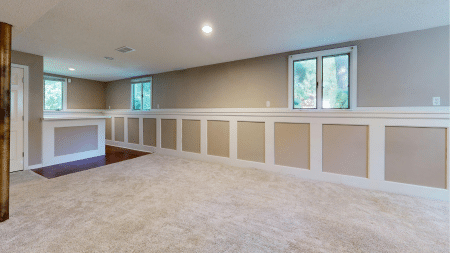
Sometimes Drywall Needs to Be Opened
This is one of the biggest homeowner concerns. In many cases, yes, portions of finished walls need to be removed to properly install an interior drainage system.
Typically, this involves:
Cutting out the lower section of drywall near the floor
Accessing the wall-to-floor joint (cove joint)
Installing drainage systems along the perimeter
The good news is that it’s usually limited to the affected areas or lower portions of the walls, not a complete demolition of the basement.
Why Interior Drainage Systems Are Common
In St. Louis, most basement water issues are caused by hydrostatic pressure. The clay-heavy soil around the home absorbs water and creates pressure against the foundation walls. Water can find its way inside of your home through class, floor joints, and sections of more porous concrete.
Interior drainage systems work by collecting that water before it reaches the finished living space. This keeps the water from entering your space and damaging your belongings.
What Happens to Flooring?
What happens to your flooring will depend on how bad the waterproofing issue is. Sometimes flooring near the walls needs to be removed to access the concrete below. This is more common with carpet, laminate flooring, or floating floor systems. Tile and certain finished surfaces may be easier to work around depending on the layout. Either way space needs to be made for the interior drain to be installed. This may mean you will need to re-install or install new flooring once the waterproofing system is installed.
What About Mold Behind Finished Walls?
This is another common issue. Finished basements can hide moisture problems for a long time. By the time homeowners notice musty smells or paint damage, moisture may already be trapped behind the walls. That’s why our team often checks hidden areas where moisture may have been sitting.
Can Waterproofing Be Done Without Tearing Everything Out?
Sometimes. If the issue is isolated or caught early, the impact to the finished space may be minimal. But if water is actively entering behind walls or under flooring, accessing those areas is usually necessary to properly solve the problem. The focus is not just stopping visible water. It’s preventing hidden moisture damage from continuing.
Why Waiting Usually Makes It Worse
A lot of homeowners delay waterproofing because they’re worried about disturbing the finished basement. Unfortunately, waiting often leads to:
- More damage to walls and flooring
- Increased mold risk
- Larger repair areas later
Catching the issue early usually reduces how much of the finished space is affected.
Why This Is Common in St. Louis
Finished basements are extremely common in the St. Louis area. So are the conditions that create basement moisture problems.
- Heavy rain
- Saturated clay soil
- Hydrostatic pressure
- Aging foundations
That combination makes basement waterproofing one of the more common upgrades homeowners eventually face.
Addressing the problem early is usually what keeps the project smaller and more manageable.
Contact Perma Jack of St. Louis
If you’re noticing moisture, musty smells, or signs of water in your finished basement, it’s worth having the space evaluated before the issue spreads further. We help homeowners identify the source of basement moisture and install waterproofing systems designed to protect both the foundation and the finished living space.
Contact our team today to schedule an inspection and get a clear understanding of what your basement may need.