

How Does Basement Waterproofing Work in a Finished Basement?
One of the biggest concerns homeowners have when they discover water in a finished basement isn’t the waterproofing itself. It’s everything that comes after. Questions like:
“Are you going to tear out all of my drywall?”
“Will my finished basement be destroyed?”
“Do I have to replace all of my flooring?”
At Perma Jack of St. Louis, we understand those concerns because we hear them on almost every finished basement inspection. Nobody wants to imagine cutting into finished walls or removing carpet they invested thousands of dollars in.
The good news is that most basement waterproofing projects are less disruptive than homeowners expect. While every situation is different, our goal is always the same: access only what’s necessary to install a permanent waterproofing system while preserving as much of the finished space as possible.
We First Determine Where the Water Is Coming From
Before discussing repairs, we need to understand how water enters the basement. That’s because water showing up along one wall doesn’t always mean that’s where it entered. We’ve inspected finished basements where the carpet was wet in one corner, only to discover the water had traveled beneath the floor from the opposite side of the room.
That’s one reason we don’t immediately start removing drywall. We first inspect the exterior of the home, evaluate grading and drainage, and then determine how groundwater is interacting with the foundation. Once we understand the source of the problem, we can recommend the best waterproofing solution with as little disruption as possible.

How We Access the Foundation Wall
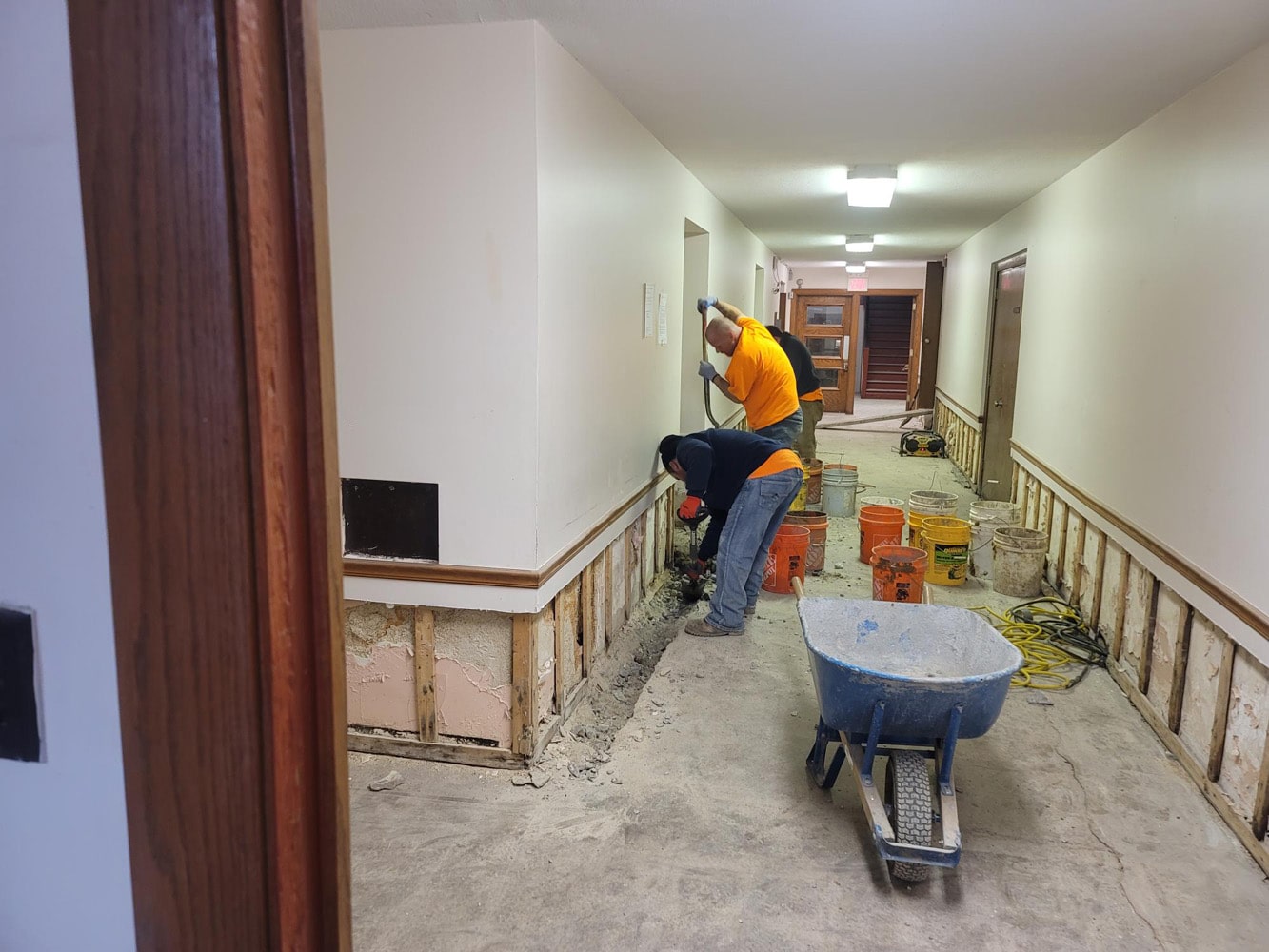
Most finished basements have drywall installed directly in front of the concrete foundation wall. If an interior waterproofing system is the right solution, we typically need access to the base of that wall so we can install the drainage system beneath the floor.
In many cases, only the lower portion of the drywall needs to be removed. We aren't demolishing the entire basement or taking down every finished wall. Instead, we carefully remove enough drywall to expose the area where the waterproofing system will be installed. Every basement is different, but homeowners are often relieved to learn that we're working along the perimeter rather than tearing apart the entire room.
Flooring Depends on the Type of Material
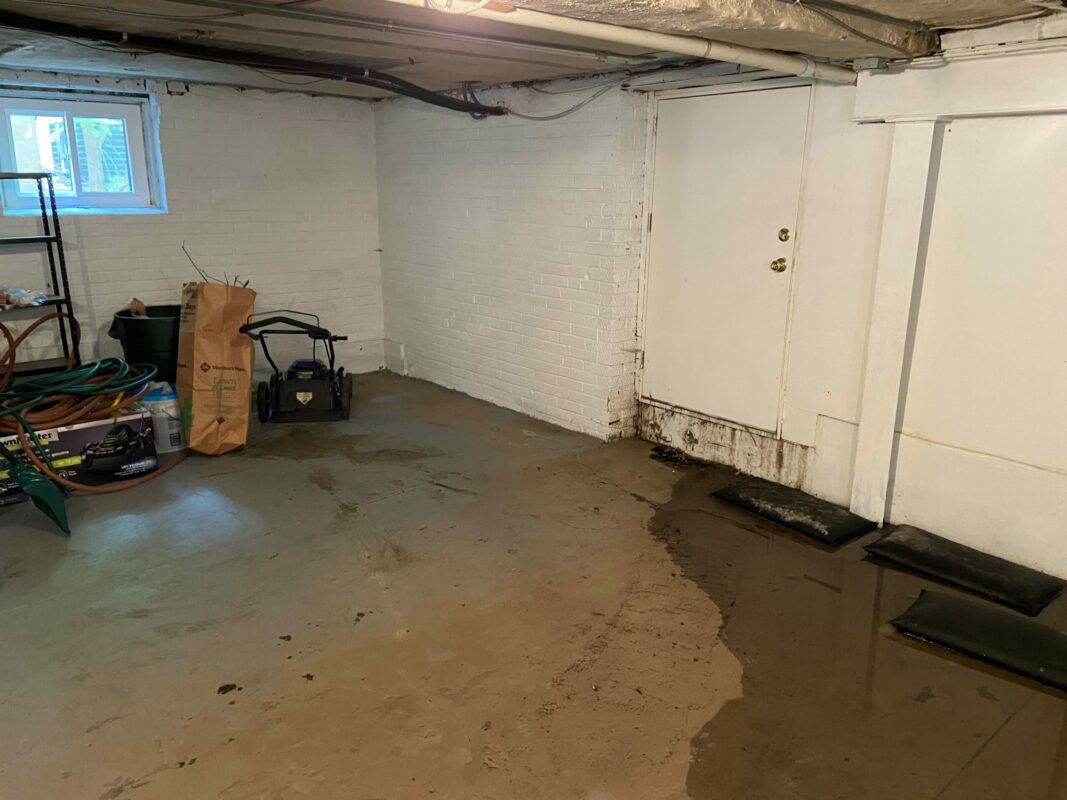
Another common question is whether all of the flooring has to be replaced. The answer depends on what was affected by the water. For example, carpet and carpet pad that have remained wet for an extended period may need to be removed, especially if moisture has become trapped underneath. Wet padding is difficult to dry completely and can become a source of odors or mold if left in place.
Hard surface flooring is different. Depending on the material and how the basement was finished, portions of the floor may be able to remain in place while the waterproofing system is installed. During every inspection, we’ll explain what we’re seeing and what portions of the finished basement may be affected.

Installing the Waterproofing System
Once access has been created, the waterproofing installation looks very similar to what we'd do in an unfinished basement. Our team removes a narrow section of concrete around the perimeter of the basement floor and excavates a trench alongside the foundation footing. That trench is lined with filter fabric before perforated drain pipe is installed to collect groundwater. The pipe directs water into a sump basin where it can be safely pumped away from the home.
After the drainage stone is placed over the pipe, the trench is covered with new concrete, creating a clean, permanent installation beneath the finished floor. Although the system is hidden once completed, it's designed to intercept groundwater before it reaches the finished living space.

The Sump Pump Is Part of the System
For many finished basements, the sump pump becomes the heart of the waterproofing system. As groundwater enters the interior drainage system, it’s collected in the sump basin and automatically discharged away from the home. At Perma Jack, we also install a Freeze Guard discharge fitting to help the system continue operating during freezing winter weather, reducing the risk of ice blocking the discharge line.
When the project is complete, the sump pump operates quietly in the background, protecting the basement every time groundwater levels rise.
What Happens After Waterproofing Is Finished?
One thing homeowners don’t always realize is that waterproofing and basement finishing are two separate projects. Our responsibility is to permanently address the water problem so the basement can remain dry moving forward. Once that work is complete, the areas that were opened for access can be repaired and refinished.
That may include:
Replacing sections
of drywall
Installing new
insulation if needed
Repainting
affected walls
Reinstalling
trim
Replacing flooring materials
that were damaged by moisture
Many homeowners choose to complete those repairs immediately, while others take the opportunity to update portions of their finished basement at the same time.
Waterproof First, Remodel Second
One of the biggest mistakes we see is homeowners repairing drywall or replacing flooring before solving the water problem. It’s understandable. Everyone wants their basement looking normal again as quickly as possible. But if moisture is still finding its way into the foundation, those new finishes can end up being damaged all over again.
We’ve worked with homeowners who had already replaced drywall once, only to have water return because the underlying problem was never corrected. That’s why we always recommend addressing the waterproofing first and completing cosmetic repairs afterward. It protects your investment and gives you confidence that the finished basement is being rebuilt on a dry foundation.
Final Thoughts
A finished basement doesn’t prevent you from waterproofing your home, and it doesn’t mean your entire basement has to be torn apart. In most cases, only the areas necessary to install the waterproofing system are opened, allowing us to permanently address the source of the water while minimizing disruption to your finished space. Once the waterproofing system is complete, you can move forward with repairs knowing the basement has been protected from future groundwater intrusion.
At Perma Jack of St. Louis, we believe homeowners deserve to understand exactly what the process looks like before work begins. Knowing what to expect makes the project far less stressful and helps you make informed decisions about protecting your home.
Contact Us For Basement Waterproofing in St. Louis
If you’ve discovered water in your finished basement, don’t assume the entire space needs to be demolished. Our can inspect your basement, determine where the water is coming from, and explain exactly what will be involved in waterproofing your home. We’ll walk you through the process, answer your questions, and recommend a solution designed to keep your basement dry for years to come. Contact us today to schedule your basement waterproofing inspection.