

Interior vs Exterior Basement Waterproofing: Which Is Better?
If you’ve got water in your basement, this question usually comes up pretty quickly. Should you waterproof from the inside, or fix it from the outside? A lot of homeowners assume exterior waterproofing is the “right” way and interior systems are just a backup. That’s not always how it works.
Quick Answer
Neither system is universally better.
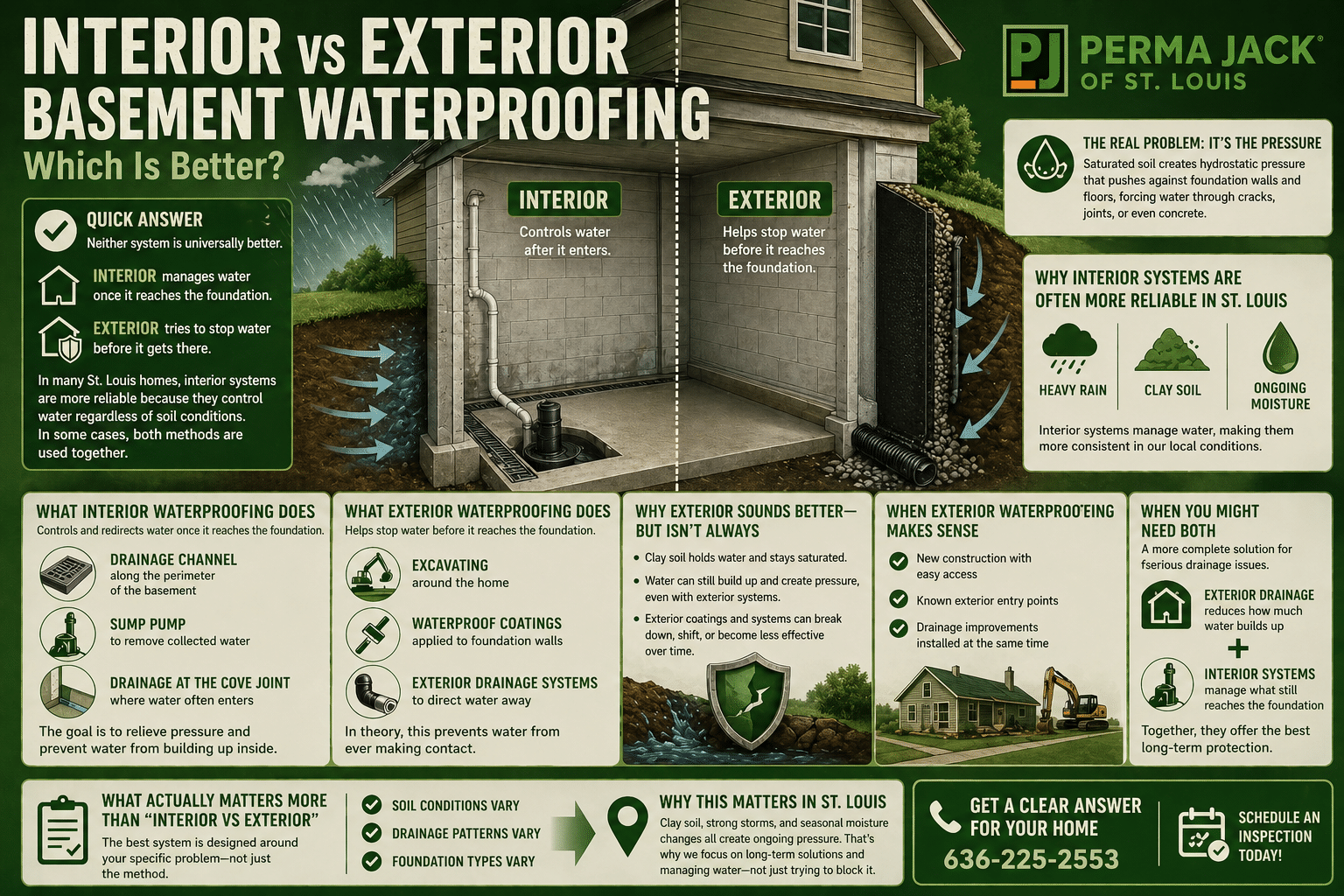
- Interior waterproofing manages water once it reaches the foundation
- Exterior waterproofing tries to stop water before it gets there
In many St. Louis homes, interior systems are more reliable because they control water regardless of soil conditions. In some cases, both methods are used together.
The Real Problem Isn’t the Water, It’s the Pressure
Before choosing a system, you need to understand what’s actually causing the leak. In most cases, especially around St. Louis, it comes down to hydrostatic pressure. When the soil around your home becomes saturated, water builds up and pushes against the foundation walls and floor. Over time, that pressure forces water through cracks, joints, or even directly through the concrete. That’s why simply “sealing the outside” doesn’t always solve the problem.
What Interior Basement Waterproofing Does
Interior systems are designed to control and redirect water once it reaches the foundation. Instead of trying to block it completely, they give it a controlled path out. A standard waterproofing system includes:
- A drainage channel along the perimeter of the basement
- A sump pump to remove collected water
- Drainage at the cove joint where water often enters
The goal is to relieve pressure and prevent water from building up inside the basement.
What Exterior Waterproofing Does
On paper, stopping water outside sounds like the perfect solution. The issue is what happens over time. In areas like St. Louis, soil conditions make this approach less predictable. Clay-heavy soil holds water. During heavy rain, that soil becomes saturated and stays that way for long periods. Even with exterior systems in place, water can still build up and create pressure. And once that pressure exists, it looks for a way in.
Another factor is longevity. Exterior coatings and systems can break down, shift, or become less effective over time, especially with soil movement.
Click to Image Enlarge
Why Exterior Waterproofing Sounds Better Than It Is
On paper, stopping water outside sounds like the perfect solution. The issue is what happens over time. In areas like St. Louis, soil conditions make this approach less predictable. Clay-heavy soil holds water. During heavy rain, that soil becomes saturated and stays that way for long periods. Even with exterior systems in place, water can still build up and create pressure. And once that pressure exists, it looks for a way in.
Another factor is longevity. Exterior coatings and systems can break down, shift, or become less effective over time, especially with soil movement.
Why Interior Systems Are Often More Reliable
Interior waterproofing works differently. It doesn’t depend on stopping water completely. It assumes water will reach the foundation and focuses on controlling it. That makes it more consistent, especially in St. Louis where we have:
- Heavy rain
- Clay soil
- Ongoing moisture conditions
Instead of fighting water, the system manages it. That’s why interior systems are often the go-to solution for long-term basement protection.
When Exterior Waterproofing Makes Sense
That doesn’t mean exterior waterproofing never has a place. It can be useful in certain situations, such as:
- New construction where access is easy
- Situations with known exterior entry points
- Projects where drainage improvements are being installed at the same time
In some cases, exterior work is part of a larger system.
When You Might Need Both
This is more common than most homeowners expect. If your property has significant drainage issues, combining approaches can make sense.
- Exterior drainage reduces how much water builds up
- Interior systems handle what still reaches the foundation
Together, they create a more complete solution.
What Actually Matters More Than “Interior vs Exterior”
The bigger question isn’t which method is better. It’s whether the system is designed around your specific problem. Every home is different.
Soil conditions vary
Drainage patterns vary
Foundation types vary
A system that works perfectly for one home may not be enough for another. That’s why a proper evaluation matters more than choosing a method upfront.
Why This Matters in St. Louis
In the St. Louis area, waterproofing decisions are heavily influenced by local conditions. Clay soil, strong storms, and seasonal moisture changes all contribute to ongoing pressure around foundations. That’s why our team at Perma Jack of St Louis focuses on long-term solutions and managing water, not just trying to block it.
Contact Us for Basement Waterproofing in St. Louis
If you’re dealing with basement water issues and aren’t sure which solution is right, the first step is understanding what’s actually causing the problem. Our team at Perma Jack of St. Louis evaluates how water is interacting with your home and recommends solutions designed to keep your basement dry long term. Contact our team today by calling 636-225-2553 or click the button below to schedule an inspection and get a clear answer on what your home needs.