
What Does a Basement Waterproofing System Actually Include?
When most homeowners hear “basement waterproofing,” they picture a quick fix. Maybe sealing a crack or applying a wall coating. In reality, a true basement waterproofing system is not a single product. It’s a combination of components working together to manage water, relieve pressure, and keep your basement dry long-term.
In the St. Louis area, where clay soil holds moisture and heavy rain is common, a complete system is often necessary to deal with groundwater and drainage issues properly. So what actually goes into a basement waterproofing system?
It Starts with Controlling Water, Not Just Blocking It
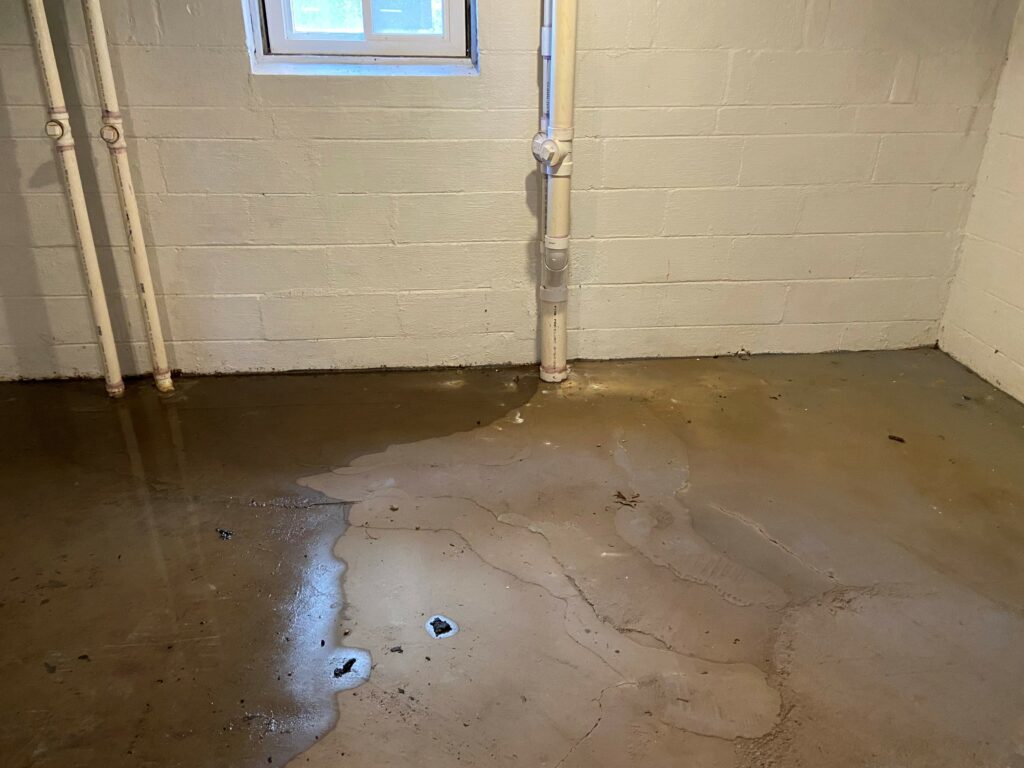
One of the biggest misconceptions is that waterproofing means stopping water completely. In most St. Louis homes, the goal is not to block water. It’s to control it and redirect it before it causes damage.
Because of hydrostatic pressure, water will always find a way toward your foundation when the soil becomes saturated. A proper system is designed to manage that pressure and give water a controlled path away from your home.
Interior Drainage System
At the core of most basement waterproofing systems is an interior drainage system.
This system is installed along the perimeter of the basement floor, right where water typically enters. It collects water at the cove joint or through cracks before it spreads across the floor.
A typical interior drainage system includes:
- A trench cut along the basement perimeter
- A perforated drain pipe placed in gravel
- A channel that directs water toward a sump pit
Instead of letting water build up, the system captures it immediately and moves it out of the basement.
Sump Pump System
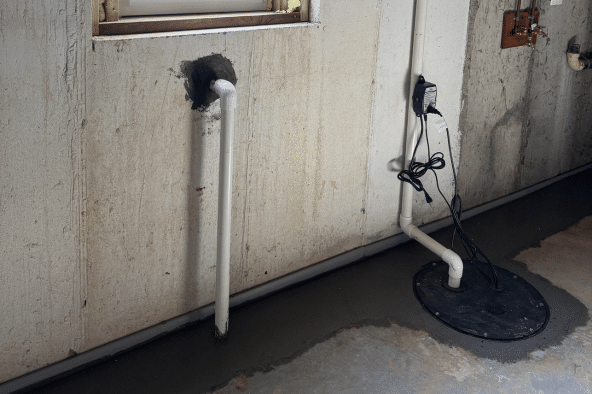
Once water is collected, it needs somewhere to go. That’s where the sump pump system comes in. The sump pump sits in a basin and removes water collected by the drainage system, pumping it away from the foundation through a discharge line.
In many St. Louis homes, a properly installed sump pump system includes:
- A primary sump pump for everyday operation
- A sealed sump pit to reduce moisture and odors
- A discharge line that directs water safely away from the home
Because storms and power outages often happen together, many systems also include a backup pump for added protection.
Vapor Barrier or Moisture Barrier
Even if liquid water is controlled, moisture can still pass through foundation walls.
That’s where a vapor barrier comes into play.
This barrier is installed along the basement walls to help control moisture and direct any wall seepage into the drainage system below.
A typical moisture barrier system:
- Covers foundation walls with a durable liner
- Channels moisture downward into the drainage system
- Helps reduce humidity and musty conditions
In St. Louis, where soil stays wet for long periods, this layer helps improve overall basement air quality while supporting the rest of the system.
French Drain System (Interior or Exterior)
French drains are another key component in many waterproofing setups.
An interior French drain is often part of the drainage system already described. It collects water along the inside of the basement and routes it to the sump pump.
In some cases, an exterior French drain may also be installed outside the foundation to reduce the amount of water reaching the basement walls in the first place.
These systems are especially useful when:
- Water consistently builds up around the foundation
- Drainage around the home is poor
- Soil holds moisture for extended periods
Foundation Crack Repair
No waterproofing system is complete without addressing obvious entry points. Cracks in foundation walls or floors are common in St. Louis due to soil movement and settling. These cracks allow water to enter directly. Crack repair typically involves sealing the crack from the inside using materials designed to stop water intrusion and prevent further leakage. While crack repair alone is not a full waterproofing solution, it is an important part of the overall system.
Discharge and Exterior Drainage Considerations
Once water is pumped out of the basement, it needs to be directed far enough away from the home so it doesn’t cycle back.
A complete system often includes:
- Proper discharge line placement
- Extensions to move water away from the foundation
- Exterior grading or drainage improvements if needed
In many St. Louis properties, poor exterior drainage is part of the original problem. Addressing it helps reduce pressure on the entire system.
How These Components Work Together
Each part of the system has a specific job, but the real value comes from how they work together.
The drainage system collects water
The sump pump removes it
The vapor barrier controls moisture
Crack repairs block direct entry points
Drainage improvements reduce outside pressure
When properly installed, these components create a system that manages water instead of reacting to it.
Why One Solution Alone Usually Isn’t Enough
A single fix, like sealing a crack or installing a sump pump by itself, may help temporarily. But in most St. Louis homes, water problems are caused by a combination of soil conditions, drainage issues, and pressure around the foundation.
That’s why a full system is often needed to solve the problem long-term. Without addressing all parts of the issue, water will usually find another way in.
Waterproofing Experts in St. Louis
At Perma Jack of St. Louis, basement waterproofing is approached as a complete system, not a one-size-fits-all fix. Homes in this region deal with clay soil, groundwater pressure, and heavy rain, all of which contribute to basement moisture problems. Our team evaluates how water is interacting with your foundation and recommends a system designed to manage it effectively.
Depending on the home, that may include interior drainage, sump pump systems, moisture barriers, crack repair, or a combination of these solutions.
Understanding What You’re Really Getting
If you’re considering basement waterproofing, it’s important to understand what’s actually being installed.
A proper system is designed to control water at multiple levels, not just cover up the symptoms. Knowing how each component works helps you make better decisions and ensures you’re investing in a long-term solution.
Contact Perma Jack of St. Louis
If you’re dealing with basement water issues or want to better understand what a waterproofing system would include for your home, it’s worth having the space evaluated. At Perma Jack of St. Louis, we help homeowners identify the source of water problems and design systems that keep basements dry. Contact Perma Jack of St. Louis today to schedule an inspection and learn what a complete waterproofing solution looks like for your home.