

Google Reviews Perma Jack of St. Louis
BBB A Rated

Call Us Today

Why St. Louis Basements Leak After Heavy Rain

If you’ve lived in the St. Louis area for very long, you’ve probably experienced a spring or early summer storm that seemed to bring days of nonstop rain. While your yard may dry out within a few days, the ground beneath your home often tells a different story.

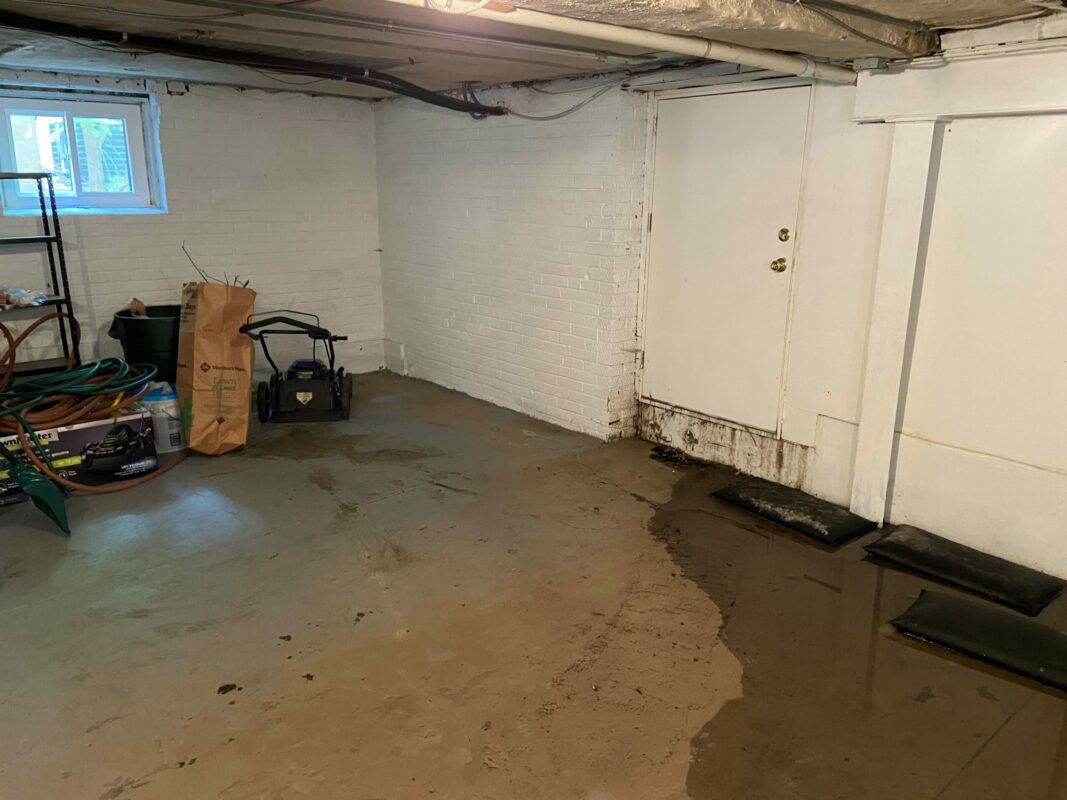
One of the most common calls we receive after these prolonged rain events is from homeowners who say, “My basement has never leaked before.” Water suddenly appears where the wall meets the floor, a corner of the basement becomes damp, or puddles develop across the floor after years without any problems.

Many homeowners tell us their basement stayed dry for years until one particularly wet spring. In reality, the drainage conditions often changed gradually before the leak ever became visible. Heavy rainfall simply exposed a problem that had been developing over time.

Heavy Rain Saturates the Soil Around Your Foundation

The biggest difference between a quick thunderstorm and several days of rain is what happens below the surface. During extended wet weather, the soil surrounding your foundation becomes saturated and can no longer absorb additional water. As more rain falls, water begins collecting around the foundation instead of draining away.

Throughout St. Louis, expansive clay soils make this even more noticeable. Clay absorbs water like a sponge, holding moisture against the foundation for much longer than sandy soils. The longer that soil remains saturated, the greater the pressure placed against your basement walls and floor.

Leaky Basement

Hydrostatic Pressure Builds Around Your Basement

Once the ground becomes saturated, water begins pushing against your foundation from every direction. This force is known as hydrostatic pressure, and it's one of the leading causes of basement water intrusion.

Concrete is incredibly strong, but it isn't completely waterproof. As pressure builds outside the foundation, water naturally looks for the easiest path inside. It may seep through small cracks, porous concrete, utility penetrations, or joints where different sections of the foundation meet.

This is why many basement leaks only appear after prolonged periods of rain rather than during a single storm.
Why Water Often Appears Where the Wall Meets the Floor

One question we hear repeatedly is:

“Why is water coming in where the wall meets the floor?”

The wall-floor joint, often called the cove joint, is one of the most common places for basement water to appear. As hydrostatic pressure increases beneath the slab and around the foundation walls, water naturally follows this joint because it’s one of the easiest pathways into the basement.

Many homeowners assume the leak started exactly where they first saw water. During inspections, we often find that’s not actually the source. Water can travel behind finished walls or along the foundation before finally becoming visible at the lowest point in the basement.

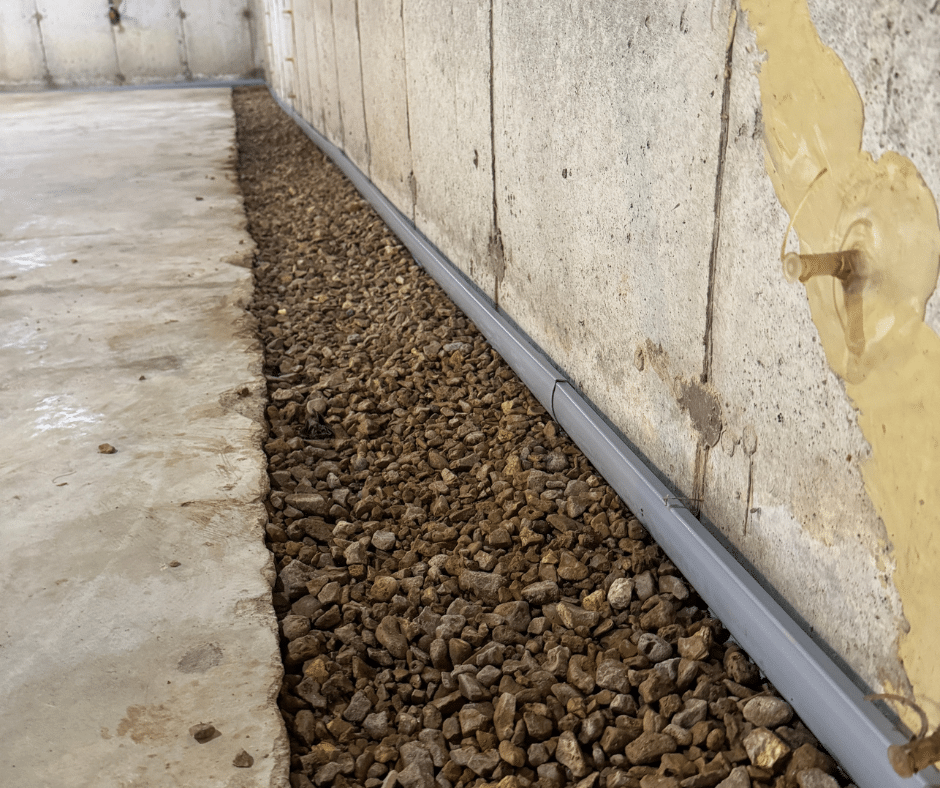
Drainage stone placed around the pipe to improve water collection and flow.

St. Louis Weather Creates the Perfect Conditions

Our local weather patterns play a major role in basement water problems. It's common for the St. Louis area to experience periods of drought followed by several inches of rain over a relatively short period. Dry clay soils shrink during hot weather, then rapidly expand once heavy rains return. At the same time, prolonged rainfall saturates the ground and increases hydrostatic pressure around the home.

Older homes can be especially vulnerable because drainage systems, foundation materials, and grading may have changed significantly over decades of settling and landscaping improvements.


What We Look For During a Basement Inspection

When we inspect a leaking basement, we’re looking for much more than the visible water.

We evaluate foundation cracks, the condition of the wall-floor joint, grading around the home, gutter and downspout performance, signs of soil erosion, sump pump operation, and previous repair attempts. The goal isn’t simply to identify where the water entered the basement. It’s to understand why it happened in the first place.

We’ve found that many basement leaks are caused by a combination of factors rather than a single problem. Addressing the underlying cause helps provide a longer-lasting solution than simply treating the visible symptoms.

Can Heavy Rain Damage a Basement That Has Never Leaked Before?

Yes. A basement that has remained dry for years can still develop leaks after an unusually wet season. Drainage conditions change over time, soil settles, gutters clog, downspouts become disconnected, and foundations naturally age.

That’s why many homeowners are caught off guard after an exceptionally rainy spring. The heavy rainfall didn’t necessarily create the problem. It simply revealed one that had been developing slowly over many years.

Final Thoughts

Heavy rain doesn’t automatically mean your basement will leak, but prolonged storms can expose weaknesses in your home’s drainage and foundation that have gone unnoticed for years.

Understanding how saturated clay soils, hydrostatic pressure, and changing drainage conditions work together is the first step toward choosing the right repair. Rather than focusing only on where the water appeared, a professional inspection can identify what’s allowing moisture to reach your basement in the first place.

Contact Us for Basement Waterproofing in St. Louis

If your basement leaks after heavy rain, don’t assume it’s something you’ll have to live with. The team at our team has been helping St. Louis homeowners throughout the region diagnose and repair basement water problems for decades.

We’ll inspect your foundation, identify the source of the leak, and recommend the right waterproofing solution for your home. Contact us today to schedule your free basement inspection.