


Push Piers vs. Helical Piers: Which Foundation Solution Is Right for Your St. Louis Home?
When your home starts showing signs of foundation settlement, cracks in brick, sticking doors, and sloping floors, it is natural to ask: How do we fix this for good?
For many St. Louis-area homes, the most reliable long-term solution is a steel pier system installed beneath the foundation to transfer the weight of your home to stable soil or bedrock. Two of the most commonly recommended options are push piers and helical piers.
At Perma Jack of St. Louis, we use engineer-backed pier systems that are designed for our local soils and climate. But push piers and helical piers are not interchangeable in every situation. Each has strengths, limitations, and ideal use cases.
This guide will walk you through:
- What push piers and helical piers are
- How each system works
- When one pier type is better than the other
- A simple comparison table to help you understand the differences
What Are Steel Piers and Why Are They Used?
Steel piers are structural supports installed beneath your existing foundation. Their job is to:
- Bypass weak, shifting, or expansive surface soils
- Transfer the weight of your home down to deeper, more stable soils or bedrock
- Stabilize the structure and, in many cases, lift settled areas closer to their original position
In the St. Louis region, where expansive clays, drought cycles, and poor fill soils are common, steel piers are often the most reliable way to correct foundation settlement and prevent future movement.
The two main types we use are push piers and helical piers.
What Are Push Piers?
Push piers (also called resistance piers) are steel tube sections that are driven into the ground using the weight of the structure as resistance.
How Push Piers Work
- Small sections of the footing are exposed along the settling area.
- Steel brackets are attached to the foundation footing.
- Steel pier sections are hydraulically driven straight down through unstable soils until they reach load-bearing strata or bedrock.
- Once proper depth and capacity are reached, the piers are locked off and hydraulic jacks are used to lift and stabilize the foundation.
- The brackets are secured, and the excavation is backfilled.
Because the house itself is used as the reaction load, push piers work best on heavier structuressuch as brick homes, two-story houses, or homes with substantial masonry.
Advantages of Push Piers
- Excellent for significant settlement where a strong lift is needed
- Ideal when bedrock or very stiff soil can be reached at a reasonable depth
- Uses the structure’s weight to achieve high capacities and long-term support
- Often preferred for heavily loaded footings and areas with known deep bearing strata
What Are Helical Piers?
Helical piers are steel shafts with helix-shaped plates welded along the shaft. They are essentially “giant screws” that are torqued into the ground.
How Helical Piers Work
- The area along the footing is excavated to expose the foundation.
- Helical pier shafts are hydraulically rotated into the soil.
- As the helical plates advance, torque is monitored to confirm that proper load-bearing capacity is being achieved.
- Once the design depth and torque are reached, a bracket connects the pier to the foundation footing.
- The system can then stabilize and, in many cases, lift the settled structure.
Helical piers do not rely on the building’s weight to be installed, which makes them especially useful in situations with lighter structures or where there is limited load available during installation.
Advantages of Helical Piers
- Great for lighter structures (porches, additions, slab-on-grade, some crawl space foundations)
- Useful where access is limited or vibration needs to be minimized
- Capacity can be verified by torque readings during installation
- Often ideal in areas where surface soils are soft or loose fill, but competent soils exist at a predictable depth
Push Piers vs. Helical Piers: Side-by-Side Comparison
Here’s a simple comparison to help clarify the differences:
Feature / Factor | Push Piers | Helical Piers |
Installation Method | Piers are driven using building weight | Piers are screwed (torqued) in with hydraulics |
Load Reaction | Requires sufficient building weight | Does not rely on structure weight |
Best For | Heavier homes, significant settlement | Lighter structures, additions, porches, slabs |
Soil Conditions | Works well when deep, dense strata exist | Great in soft or fill soils with known bearing depth |
Capacity Verification | Based on depth and hydraulic pressure | Based on measured torque |
Typical Use in STL Area | Main homes, deep settlement repairs | Additions, porches, some crawl spaces and slabs |
Lift Potential | Often excellent for major lifts | Good, especially for moderate settlement |
Vibration / Disturbance | Some vibration during driving | Typically lower vibration during installation |
Both systems are engineer-designed and, when installed properly, provide strong, long-lasting foundation support. The best choice depends on your home, your soil conditions, and your structural loads.
How Do We Decide Which Pier System to Use?
At Perma Jack of St. Louis, we do not believe in “one-size-fits-all” repairs.
Instead, we look at:
- Type of structure – full foundation, crawl space, porch, addition, slab
- Weight of the building – heavier vs lighter construction
- Severity and pattern of settlement – isolated corner vs whole side of home
- Soil conditions – based on site evaluation and regional experience
- Access and logistics – space around the home, utilities, landscaping
From there, we recommend a pier type and layout that can be supported by engineering and manufacturer data – whether that means resistance push piers, helical piers, or a combination of both.
Why Engineer-Backed Pier Repairs Matter
Foundation piers are not “just hardware” – they are structural systems that must be designed and installed correctly to protect your home.
An engineer-backed repair means:
- Pier locations and loads are calculated with structural performance in mind
- The chosen system is appropriate for the home’s weight and local soils
- Installation follows tested procedures and manufacturer specifications
- Long-term performance is supported by design data, not guesswork
Perma Jack of St. Louis uses proven steel pier systems and works with engineering guidance so your repair is based on more than just rules of thumb.
Signs You May Need Steel Pier Repair
Whether push piers or helical piers are right for your home, the warning signs of settlement are often the same:
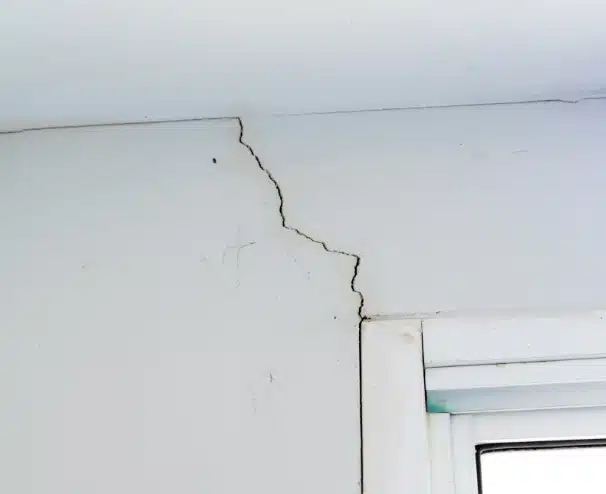
Stair-step cracks in brick or block
Vertical or diagonal cracks in foundation walls
Doors and windows that stick or do not latch
Uneven or sloping floors
Gaps between walls and ceilings or baseboards
Chimney pulling away from the home
If you’re seeing more than one of these issues, your foundation may already be moving.
Steel Pier Repair in St. Louis: Talk to the Local Experts
If you are worried about foundation settlement, you do not have to decide between push piers and helical piers on your own.
At Perma Jack of St. Louis, we:
- Inspect your home and foundation in person
- Identify the type and extent of settlement
- Explain whether push piers, helical piers, or both make the most sense for your situation
- Provide an engineer-backed repair plan designed for St. Louis soils and structures
Schedule Your Foundation Evaluation
If you are seeing cracks, uneven floors, or other signs of settlement, now is the time to act before the damage worsens and becomes more expensive to repair.
Contact Perma Jack of St. Louis today to schedule a foundation evaluation.
We’ll help you understand your options, explain the difference between push piers and helical piers for your specific home, and design a long-term solution that keeps your foundation stable for years to come.