


What Causes Basement Wall Cracks
Cracks in your basement walls aren’t just an eyesore—they can be the first sign of a serious foundation issue. Whether you’ve noticed a thin hairline crack or a jagged, widening fissure, it’s important to understand what’s causing it—and how to fix it before it gets worse.
At Perma-Jack of St. Louis, we specialize in identifying the root cause of foundation cracks and delivering long-lasting wall crack repair solutions. Here’s what you need to know.
What Causes Basement Wall Cracks?
1. Hydrostatic Pressure
When the soil surrounding your foundation becomes saturated—especially after heavy rains—it exerts pressure against your basement walls. This force is called hydrostatic pressure, and over time, it can cause walls to bow inward and crack.
2. Expansive Clay Soil
St. Louis sits on a mix of clay-heavy soil, which expands when wet and contracts when dry. This cycle creates repeated stress on your foundation, pushing and pulling on the walls until cracks form.
3. Poor Drainage or Grading
If your yard slopes toward your home or your gutters aren’t channeling water away, rainwater will collect around your foundation. This excess moisture increases soil pressure and leads to wall movement and cracking.
4. Foundation Settlement
As a home settles over time, parts of the foundation may shift unevenly. This differential settlement creates tension and shear forces that cause diagonal or stair-step cracks in basement walls—especially near corners and windows.
5. Construction or Backfill Issues
Poor construction practices or improperly compacted backfill around your foundation can create voids or weak spots that lead to long-term instability and cracking.
What Do Different Cracks Mean?
Not all cracks are the same. At Perma-Jack, we know that the type, size, and direction of a crack can reveal a lot about what’s going wrong:
- Vertical Cracks – Often caused by concrete shrinkage or minor settling. These can be benign but may still allow water intrusion.
- Horizontal Cracks – A serious warning sign, typically due to hydrostatic pressure. These cracks indicate your wall is bowing and at risk of structural failure.
- Stair-Step Cracks – Usually found in block foundations, and a common sign of foundation settlement.
- Diagonal Cracks – Often linked to shifting soil or footing movement, especially near windows or corners.
How Perma-Jack Fixes Basement Wall Cracks
1. Structural Crack Repair
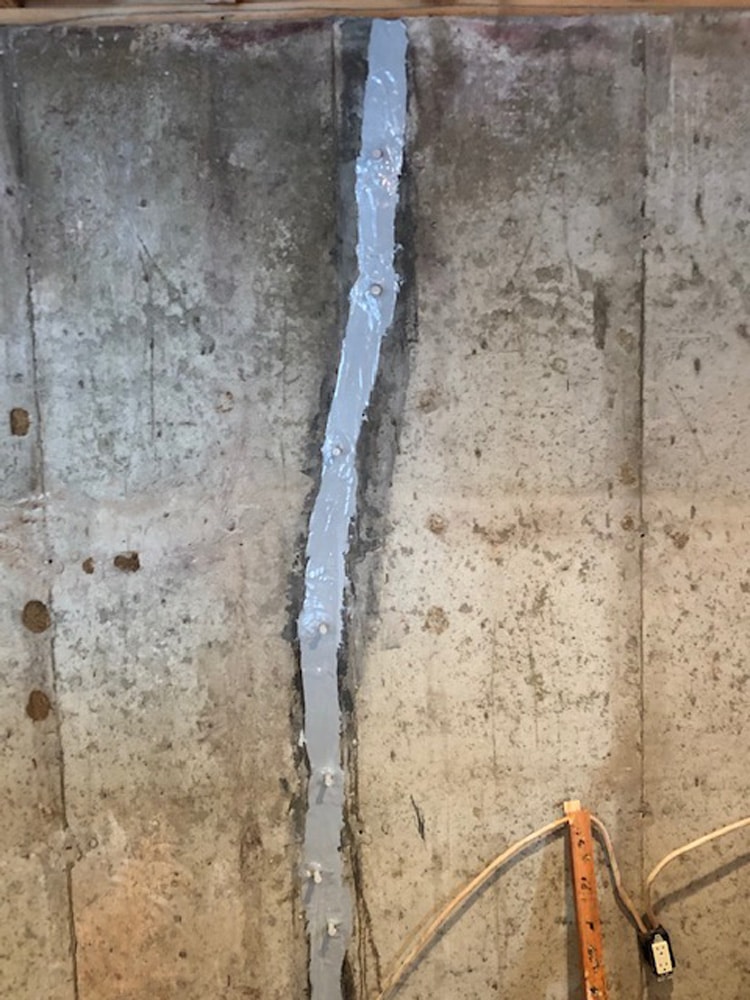
For non-structural cracks, we use high-pressure epoxy or polyurethane injection to fill the void, seal out moisture, and restore the wall’s integrity from the inside out.
2. Carbon Fiber Reinforcement
For walls that are bowing or at risk of inward movement, carbon fiber strips are bonded to the surface. These ultra-strong straps add tensile strength and prevent further displacement without bulky braces.
3. Wall Anchors or Bracing
When significant pressure is deforming the wall, steel wall anchors or brace systems are installed to stabilize and slowly realign the wall over time.
4. Foundation Piering
If cracks are caused by uneven settlement, we install deep foundation piers to lift and stabilize the structure. Our piering system reaches load-bearing soil layers, eliminating further movement.
5. Drainage and Waterproofing
In many cases, cracking is tied to water pressure. We offer interior and exterior drainage solutions, sump pumps, and grading recommendations to keep water away from your foundation permanently.
Schedule Your Crack Evaluation Today
At Perma-Jack, we’ve spent decades working with homes in St. Louis and the surrounding areas. We understand the local soil conditions, water patterns, and building codes—and we know how to fix foundation problems the right way.
Whether it’s a hairline crack or a bowing basement wall, our team can provide a thorough inspection and custom repair plan designed to protect your home for years to come.
Contact Perma Jack of St. Louis today for a basement inspection and personalized waterproofing recommendation.