


What Is the Clay Bowl Effect and How Does It Affect Homes in St. Louis?
When it comes to protecting your home’s foundation, understanding how your soil behaves is just as important as the construction itself. In areas like St. Louis, where expansive clay soils are common, one major factor contributing to foundation issues is something called the Clay Bowl Effect. It’s a term many homeowners have never heard of—but it plays a big role in why basements leak and foundations settle.
At Perma Jack of St. Louis, we’ve seen firsthand how this natural soil behavior can lead to costly repairs if not addressed. In this post, we’ll explain what the Clay Bowl Effect is, why it matters, and what you can do to protect your home from its effects.

What Is the Clay Bowl Effect?
When your home was built, contractors excavated a large hole to pour the foundation—whether it’s a full basement, crawl space, or slab. After the foundation walls were constructed, the soil was pushed back into place around the perimeter. This backfilled soil is looser and more porous than the untouched, original soil that surrounds it.
This looser soil forms a sort of “bowl” around your foundation that holds more water—hence the term Clay Bowl Effect. During rainstorms or snowmelt, this area becomes saturated quickly, and water begins to collect around your foundation.
Why It Matters for Your Foundation
In the St. Louis region, expansive clay soils are a major contributor to foundation trouble. When combined with the clay bowl effect, here’s what can happen:
1. Hydrostatic Pressure Builds Up
Saturated soil around your foundation creates hydrostatic pressure, which pushes water against basement walls. Over time, this can lead to cracks, leaks, and bowing walls.
2. Foundation Settlement
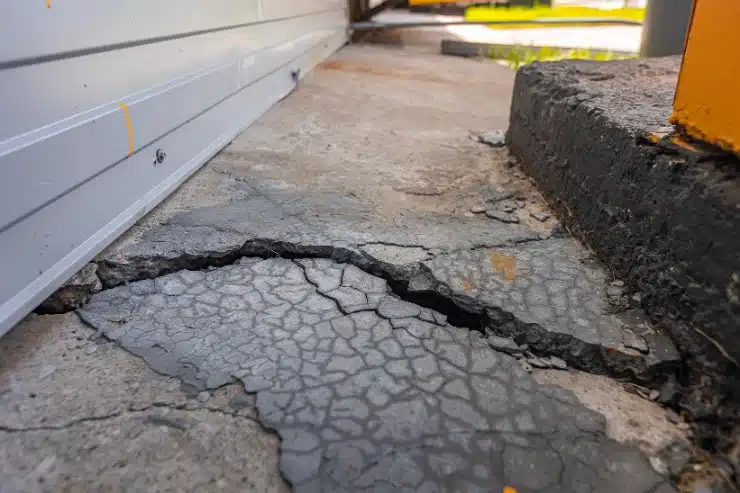
Excess moisture softens the soil beneath the foundation, while dry periods cause it to shrink and pull away. This constant expansion and contraction leads to foundation movement and settlement, especially when the weight of your home is unevenly supported.
3. Basement Water Intrusion
The looser backfill around the foundation acts like a sponge, holding moisture against your walls. If your waterproofing system is outdated—or missing altogether—that moisture can seep through cracks or gaps and make its way into your basement.
Signs the Clay Bowl Effect May Be Impacting Your Home
- Cracks in basement walls or floors
- Water leaking in during or after heavy rains
- Musty smells or visible mold in the basement
- Soil pulling away from the foundation during droughts
- Bowed walls or stair-step cracks in exterior brick
How Perma Jack of St. Louis Addresses the Clay Bowl Effect
We specialize in solving the underlying causes of foundation and water problems—not just treating the symptoms.
Here’s how we combat the effects of saturated clay soil:
Foundation Stabilization
We install engineered solutions like steel push piers or helical piers to anchor your foundation into stable, load-bearing soil. These systems bypass weak surface layers and help restore your home’s structural integrity.
Exterior and Interior Waterproofing
We protect basements from water intrusion by installing drainage systems, sump pumps, and waterproof membranes—keeping your lower level dry even when the clay bowl fills with water.
Soil Grading and Drainage Improvements
Improper grading and poor downspout drainage make the clay bowl effect worse. We evaluate your site and recommend solutions to move water away from your home’s foundation.
Don’t Let Soil Be the Silent Threat
The clay bowl effect may be invisible, but the damage it causes isn’t. If you’re seeing signs of foundation settlement, cracks, or water problems in your St. Louis home, it’s time to act before the problem gets worse.
At Perma Jack of St. Louis, we’ve been helping homeowners across the region protect their homes for decades. Our expert team understands local soil conditions and offers long-term solutions that work.
Schedule your free foundation inspection today
Call us or fill out our online form to get started—we’ll help you take the first step toward a dry, stable home.