
Downspout Extensions: Do They Really Work?
One of the most common ways that water enters your basement is through poor drainage. When heavy rain leaves water pooled around your foundations, it can seep into the ground, causing foundation cracks and providing a path for water to enter your home. One of the first recommendations to solve this is to solve the drainage issues around you home. Downspout extensions can help in many situations but aren’t the only drainage solution that can keep your basement dry.
Quick Answer
Yes, downspout extensions can work, but only for minor drainage issues. They help move water away from your foundation, but they do not fix underlying problems like poor grading, saturated soil, or heavy water buildup. In many St. Louis homes, a more complete drainage system is needed.
What Downspout Extensions Actually Do
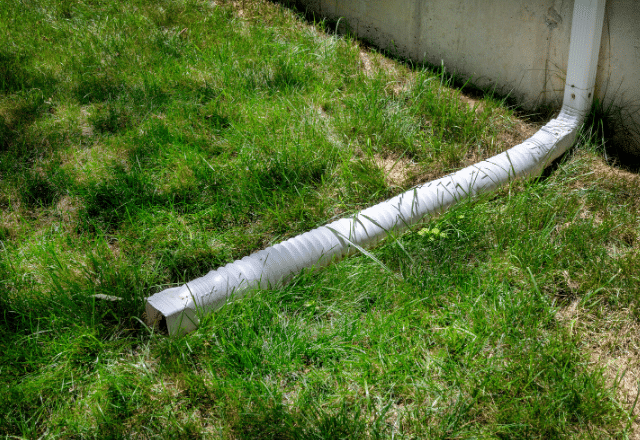
Downspouts carry water from your gutters down to the ground. Without an extension, that water is released right next to your foundation. A downspout extension simply moves that water a few feet away from the house. This helps reduce the amount of water collecting directly at the base of your foundation.
Common types include:
- Plastic extensions attached to the downspout
- Flexible tubing that directs water outward
- Splash blocks that guide water away on the surface
They’re designed to improve surface drainage, not solve deeper water issues.
Why Drainage Problems Are So Common in St. Louis
Drainage issues are especially common in the St. Louis area because of the soil and weather conditions. Much of the region sits on clay-heavy soil that holds water instead of draining it. After heavy rain, the ground becomes saturated and stays wet for long periods. Add in strong storms and seasonal weather changes, and water buildup around homes becomes very common.
Even if you extend your downspouts, that water still has to go somewhere. If the soil can’t absorb it or the yard doesn’t slope properly, it will eventually make its way back toward the foundation.
Vapor Barrier or Moisture Barrier
Downspout extensions can be effective in certain situations. They tend to work best when the drainage problem is minor and limited to roof runoff. You may only need downspout extensions if:
- Water is collecting right at the base of the downspout
- Your yard already slopes away from the home
- There are no signs of basement or crawl space moisture
- The issue only happens during light or moderate rain
In these cases, simply moving water a few feet away can be enough to prevent problems.
When Downspout Extensions Are Not Enough
In many homes, downspout extensions only solve part of the problem. If the underlying drainage conditions aren’t addressed, water will still collect around your home. You may need more than just extensions if:
- Water pools near the foundation even after extending downspouts
- The yard is flat or slopes toward the home
- Soil stays wet or muddy for days after rain
- You’ve noticed basement leaks or crawl space moisture
- Multiple areas around the property have drainage issues
In these situations, the problem is not just where the water is coming from, but where it’s going.
Downspout Extensions vs Underground Drainage
This is where many homeowners start to see the difference between a quick fix and a long-term solution. Downspout extensions move water along the surface for a short distance. That’s helpful, but limited. Underground drainage systems take it further.
Downspout Extensions:
- Move water a few feet away
- Sit on the surface
- Can shift, clog, or disconnect
- Best for minor issues
Underground Drainage:
- Moves water much farther from the home
- Installed below ground for long-term reliability
- Handles larger volumes of water
- Designed for ongoing drainage problems
Underground systems are especially useful in St. Louis, where soil conditions make it difficult for water to naturally drain away. Learn more about our yard drainage services.
What Is a Complete Yard Drainage Solution?
For many homes, proper drainage involves more than just extending a downspout. A complete system is designed to control how water moves across your property. This may include:
- Downspout extensions as a starting point
- Underground drainage pipes to carry water away
- Catch basins to collect surface water
- French drains to manage groundwater
- Grading improvements to direct water flow
The goal is to move water away from your foundation and prevent it from coming back.
Signs You Need More Than a Downspout Extension
If you’re not sure whether your current setup is enough, there are some clear signs to look for. You may need a more advanced drainage solution if you notice:
- Water pooling near your home after rain
- Damp basement walls or floors
- Musty smells in the basement or crawl space
- Soil erosion around the foundation
- Areas of the yard that stay wet or muddy
These signs usually indicate that water is not being properly managed.
Final Answer
Downspout extensions do work, but only in the right situation. They’re a good first step for minor issues, but they are not a full solution for most drainage problems in St. Louis. If water is still pooling or causing issues around your home, it’s likely time to look at a more complete drainage system.
Contact Perma Jack of St. Louis
If you’re dealing with water around your home and aren’t sure whether downspout extensions are enough, it’s worth having your drainage evaluated. Our team at Perma Jack of St. Louis helps homeowners identify the source of drainage problems and install solutions designed to protect their homes long-term. Contact us today by calling our office or by clicking the button below to fill out our online contact form.