

Early Warning Signs of Foundation Failure
Most foundation problems don’t show up all at once. They start small and are easy to ignore, a hairline foundation crack, a small drywall crack, or a stickling door. Most homeowners don’t think much about the issues at first. Those small signs are often the early stages of something bigger. The key is knowing what to look for before the problem turns into a structural issue and major repair.
Quick Answer
Early signs of foundation failure usually show up as cracks, shifting, or changes in how your home functions.
Common warning signs include:
- Cracks in walls or foundation
- Doors and windows that stick
- Uneven or sloping floors
- Gaps forming around trim or ceilings
- Water intrusion or moisture issues
These changes are usually caused by movement in the foundation, not just normal wear.
Why Foundation Problems Are Common in St. Louis
Across the St. Louis area our team sees homes with many common early warning signs paired with the structural issues that come later. In our area soil plays a big role. Much of the surrounding area sits on clay-heavy soils that expand when they absorb water and shrink when they dry out. That constant expansion and contraction cycle puts stress on foundations over time. Add in spring rans and freeze-thaw cycles and the soil underneath your home is rarely stable for a long period of time. That movement is what causes foundation issues.
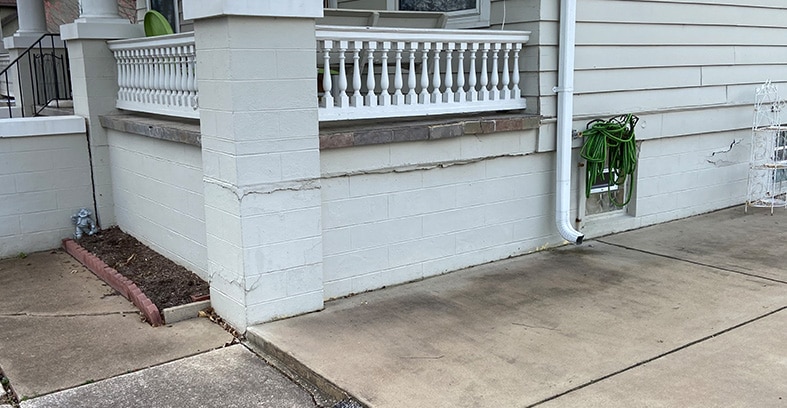
Cracks That Don’t Look Right
Not all cracks are serious, but some are early warning signs. You’ll want to pay attention to:
Diagonal cracks near doors and windows
Stair-step cracks in exterior and interior brick or block walls
Cracks wider than a quarter inch
Cracks that continue to grow over time
Small hairline cracks are common. Larger or changing cracks usually point to movement.
Doors and Windows Starting to Stick
If doors or windows suddenly become harder to open or close, it’s often not the hardware. It’s the frame shifting. As the foundation moves, the structure above it goes slightly out of alignment. That can cause:
- Doors that rub or won’t latch
- Windows that stick or won’t open smoothly
- Visible gaps around frames
This is one of the more noticeable early signs because it affects daily use.
Uneven or Sloping Floors
Floor changes can be subtle at first. You might not notice it right away, but over time you may feel a slight slope when walking through certain areas. Signs include:
- Floors that feel uneven underfoot
- Furniture that doesn’t sit level
- Gaps where the floor meets baseboards
This usually happens when one part of the foundation settles more than another.
Gaps and Separation Inside the Home
As the structure shifts, materials begin to pull apart. You might start to see:
- Gaps between walls and ceilings
- Trim separating from walls
- Small cracks forming in corners
These are signs that different parts of the home are moving at different rates.
Basement or Foundation Wall Changes
If your home has a basement, some of the most important signs show up there. Look for:
- Horizontal cracks in foundation walls
- Walls that appear to bow inward
- Water entering through cracks
- Cracks forming along the floor
These signs often point to pressure building against the foundation.
Changes After Heavy Rain
In St. Louis, many foundation issues become more noticeable after storms. If you’re seeing new cracks or worsening problems after heavy rain, it’s usually tied to soil conditions. Saturated soil creates pressure around the foundation, and that’s when movement tends to show up.
What Most Homeowners Miss
A lot of people treat the symptoms instead of the cause. They patch cracks, repaint walls, or adjust doors. But if the foundation is still moving, those fixes don’t last. The visible signs are just the result of what’s happening underneath the home.
When It Becomes a Serious Problem
Not every sign means immediate failure, but certain patterns shouldn’t be ignored. You should take a closer look if:
- Multiple signs are appearing at the same time
- Cracks are getting larger
- Movement seems to be ongoing
- Structural changes are becoming more noticeable
At that point, it’s usually more than normal settling.
When It Becomes a Serious Problem
Foundation problems don’t fix themselves. They tend to get worse as soil conditions continue to change. Catching foundation issues early can limit how much the foundation moves, reduce repair complexity, and avoid larger structural problems. The longer it’s left alone, the more complicated and expensive the repair typically becomes.
Contact Us For Foundation Repair in St. Louis
If you’re noticing any of these warning signs or something just doesn’t feel right with your home, it’s worth having it evaluated. Our team at Perma Jack of St. Louis helps homeowners identify the cause of foundation movement and recommend solutions designed to stabilize and protect the structure.
Contact our team today by calling 636-225-2553 or click the button below to schedule an inspection and get a clear understanding of what’s happening beneath your home.