

Google Reviews Perma Jack of St. Louis
BBB A Rated

Call Us Today

Why Older St. Louis Additions Settle Differently Than the Original House

When we inspect older homes around St. Louis, we sometimes find something that surprises homeowners. The original portion of a house may have been standing for 80, 100, or even 120 years with relatively little movement, while an addition built decades later shows cracks, uneven floors, or signs of foundation settlement.

It seems backward. You might expect the oldest part of the house to have the most foundation problems, but age alone doesn’t determine how a foundation will perform. We look at how each section of the home was built, what it’s sitting on, how water moves around it, and whether different parts of the structure are moving independently.

The Original Foundation Has Had Decades to Settle

Many older St. Louis homes have already gone through most of their initial settlement. The soil beneath the original foundation has supported the structure through decades of wet springs, summer droughts, freezing weather, and changing soil moisture.

That doesn’t mean an old foundation can’t develop problems. It does mean that a foundation that has remained relatively stable for 100 years has a long history we can evaluate.

An addition is different. It may have been constructed 20, 40, or 60 years after the original home and built using completely different materials and methods. That creates a newer foundation right next to an older one, and the two don’t always move together.

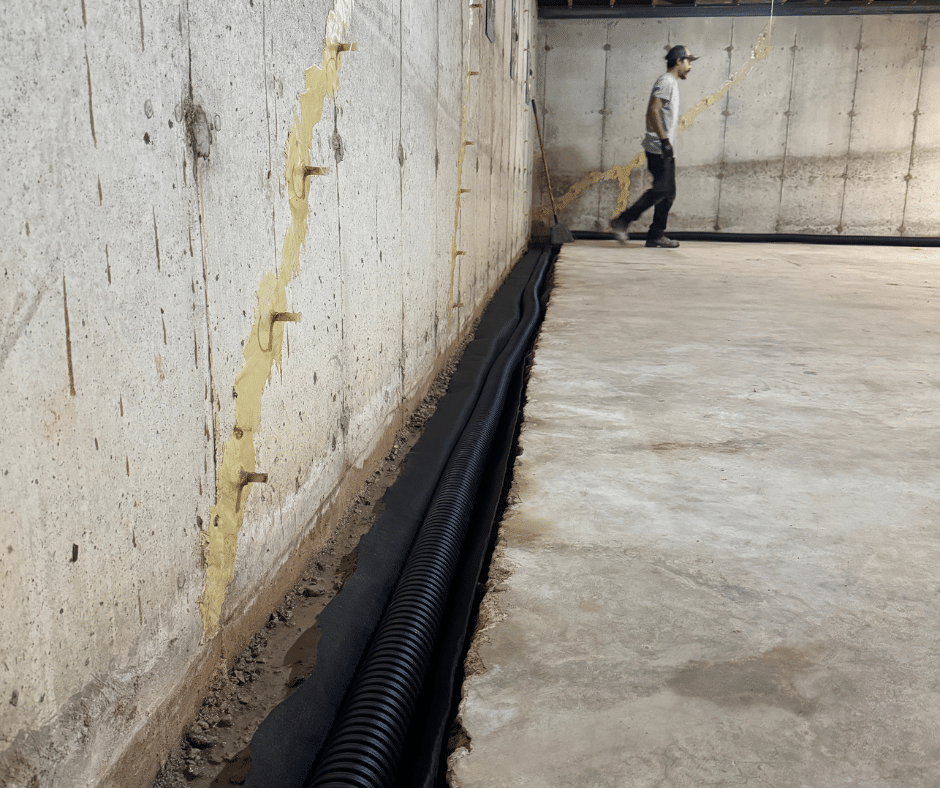
Soil barrier fabric installed to help protect the drainage system from sediment intrusion.

Additions May Be Built on Different Soil

One of the first things we consider is what happened to the soil when the addition was constructed. Building an addition usually requires excavation and soil disturbance. Depending on how the project was built, portions of the new foundation may bear on soil that has a different history than the soil supporting the original house. Fill placed around previous construction may also have been compacted differently.

This becomes particularly important around St. Louis because our soils can change considerably with moisture. Clay-rich soil can swell when it takes on water and shrink during extended dry periods. If the original foundation and addition are supported under different conditions, they may respond differently to those seasonal changes.

The result can be differential settlement, where one portion of the structure moves more than another.
The Connection Between the Old and New House Tells Us a Lot

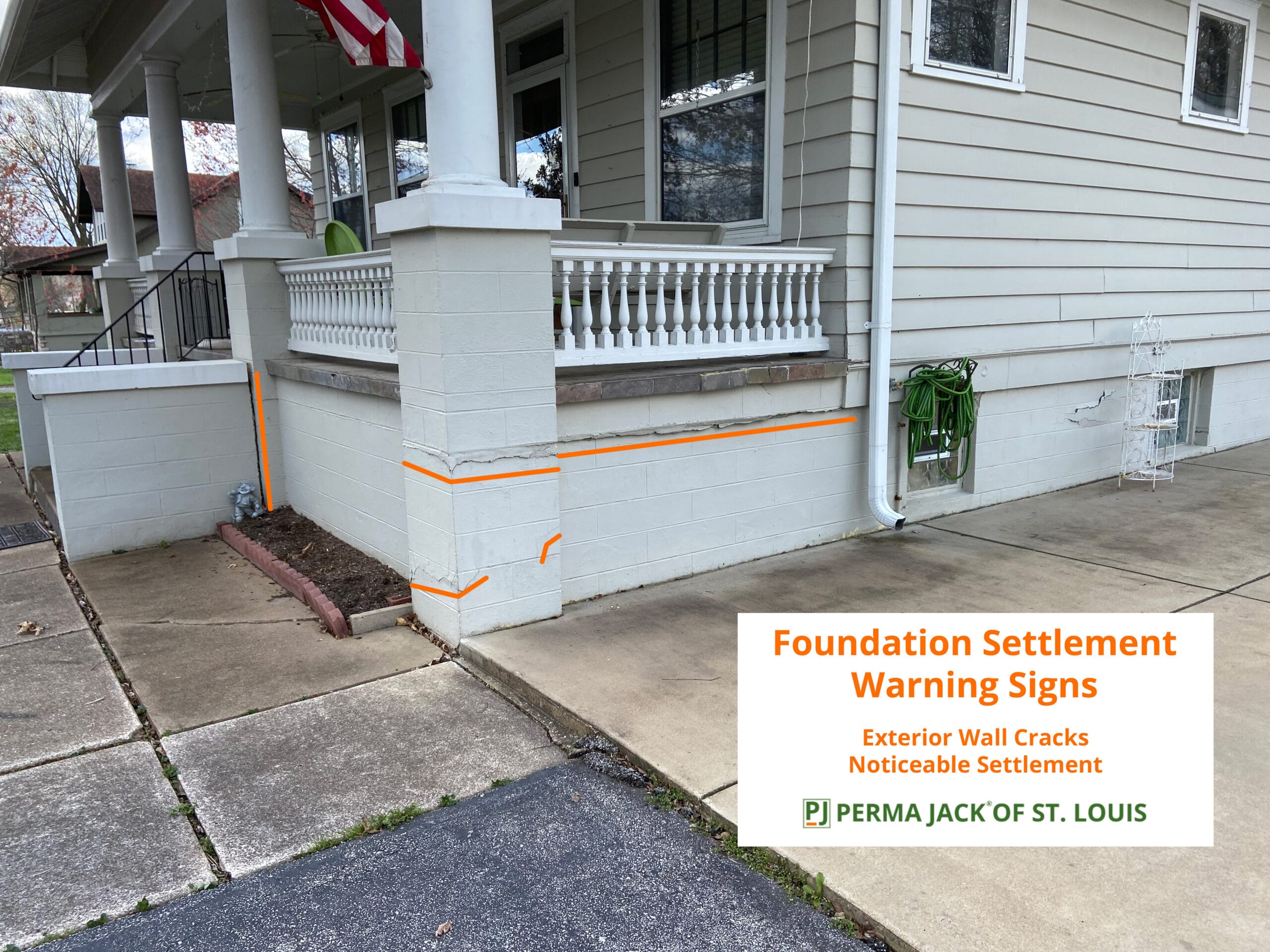
When we’re evaluating an older home with an addition, one of the areas we pay close attention to is where the two structures meet. Cracks near that transition don’t automatically mean the addition has a serious foundation problem. Some movement between structures built at different times isn’t unusual. What matters is the pattern, amount, and progression of that movement.

We may look for separation in masonry, recurring drywall cracks, doors that no longer operate properly, changes in floor elevation, or gaps where the addition meets the original house. When several symptoms appear in the same area, they give us a better picture of how the two structures are behaving. That’s much more useful than judging the foundation based on one crack.

Porch Conversions Can Be Especially Interesting

St. Louis has plenty of older homes that have changed considerably since they were first built. Porches have been enclosed, kitchens expanded, rear rooms added, and existing spaces converted into year-round living areas.

A porch foundation that was perfectly adequate for an open porch wasn't necessarily designed with a future enclosed room in mind. The renovation may have added walls, insulation, windows, flooring, HVAC equipment, and other loads to a structure originally designed for something much simpler.

This doesn't mean every converted porch has a foundation problem. It does mean that when we see settlement in one of these areas, we want to understand what was originally built and how the structure has changed since then.


Drainage Around an Addition Can Be Different Too

Adding onto a house also changes the way rainwater moves around the property. The roof becomes larger. Gutters and downspouts may be relocated. Patios, sidewalks, landscaping, and grading may change. A new inside corner between the addition and original house can create an area where roof runoff or surface water becomes concentrated.

We’ve seen situations where the structural difference between an addition and the original home wasn’t the only issue. The addition had also changed the drainage pattern around that portion of the foundation.

In St. Louis soils, repeatedly concentrating water near one part of a foundation can create very different soil conditions from those found only a short distance away.

Why the Crack Isn't Enough to Diagnose Settlement

If we find cracking around an addition, we don’t automatically assume it needs piers.

We want to know whether the movement is old or active, whether the addition is actually settling, and what conditions may be contributing to it. That means looking at the original foundation and the addition together.

We consider the location and direction of cracks, floor elevations, foundation construction, drainage, grading, previous repairs, and other signs of movement. Sometimes the evidence points toward active foundation settlement that should be stabilized. In other cases, drainage improvements, crack repair, or monitoring may be more appropriate. The repair should fit the problem we find.

What We've Learned From Older St. Louis Homes

One thing we’ve learned from inspecting older homes throughout the St. Louis area is that newer doesn’t always mean more stable.

A century-old portion of a home may have found a relatively stable relationship with the soil beneath it, while a much newer addition responds differently because of its foundation design, soil conditions, drainage, or construction history. We’ve also seen homes where additions perform perfectly well and movement occurs somewhere else entirely.

That’s why understanding the history of an older house can be so valuable during a foundation inspection. An addition isn’t just another room. Structurally, it may be a separate foundation built decades later under completely different conditions.

When Should You Have an Addition Inspected?

A crack where an addition meets the original house isn’t automatically an emergency, but there are situations worth having evaluated. Pay attention if cracks continue to widen, doors or windows begin sticking, floors noticeably slope, masonry separates, or new cracks appear in the same area.

Changes matter. If something that remained unchanged for years suddenly begins moving, there’s usually a reason. A foundation inspection can help determine whether you’re seeing old movement, normal differences between two sections of the home, or active settlement that needs to be addressed.

Contact us For Foundation Repair in St. Louis

If an addition appears to be pulling away from your house, the floors have become uneven, or you’re noticing new foundation or masonry cracks, our team can help determine what’s happening.

We evaluate the entire structure, including the original foundation, additions, drainage conditions, settlement patterns, and surrounding soil conditions before recommending a repair. Sometimes stabilization is necessary. Other times, the right recommendation is much simpler.

Contact us to schedule a foundation inspection and find out why different parts of your home may be moving differently.