
Can Street Creep Cause a Bowed Garage Wall?
The Short Answer: Yes, Driveway Pressure Can Push a Garage Wall In
Street creep can push a garage wall inward, usually the foundation walls on either side of the garage door. Concrete expands in heat and contracts in cold, and in winter the widened joints in streets and driveways fill with salt, sand and grit. When the paving expands again, it pushes as one piece against the garage slab and the walls beside the door. That movement does not reliably stop on its own.
Signs That Point to Street Creep
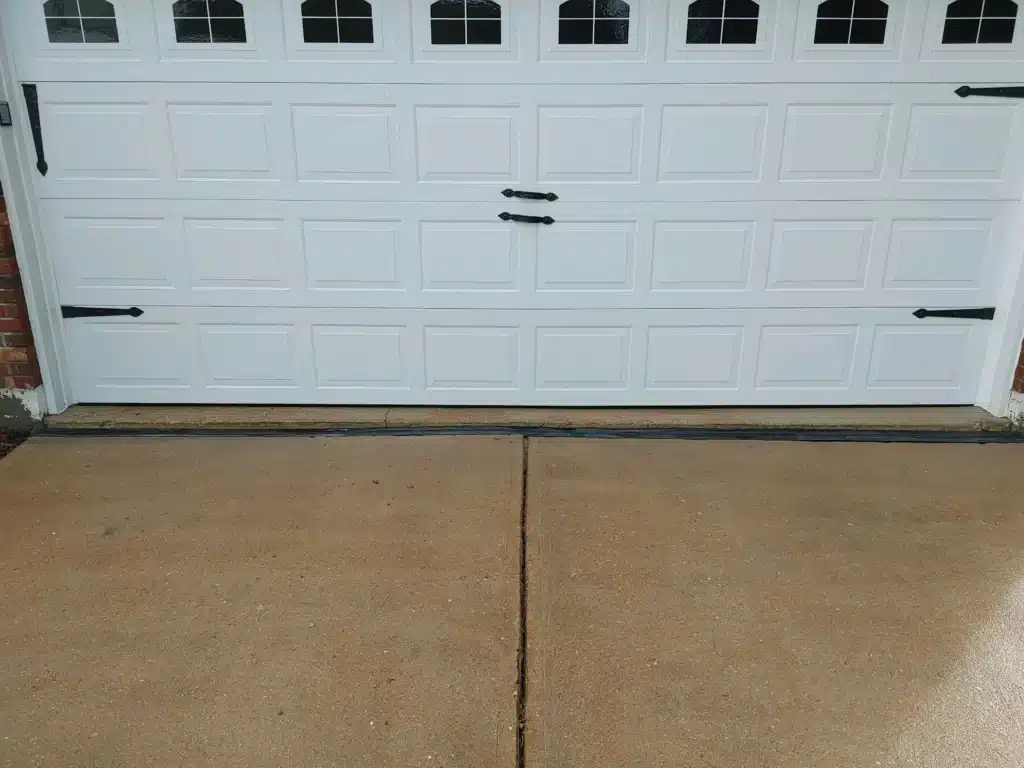
Watch for walls beside the door that lean in or crack, a door opening that binds, and driveway joints that look squeezed shut or crushed. Inside, look for floor movement at the wall or gaps opening behind the foundation walls. Some separation where the floor meets the wall can be part of how the garage was built, so change is what matters: a gap that widens deserves an inspection.
Other Problems That Look Like Street Creep
A garage built into a slope can bow from hillside pressure, and wet clay and water pressure push walls in without help from the driveway. Our guide to what causes bowed walls covers those cases. Settlement can crack walls too, and a door bowing at the top can be a panel or hardware issue for a garage door company if the wall is straight.
Relieving the Pressure and Stabilizing the Wall Are Two Different Jobs
For street creep repair in St. Louis, our crews cut out a section of driveway concrete and install an extruded EPDM rubber expansion joint designed to compress about 3 inches while keeping a continuous seal. For bowed wall repair, we typically use steel plate anchors connected by rods to anchors in stable soil, backed by our Lifetime of Structure Warranty. Anchors alone leave the driveway pushing, and a joint alone does not fix a wall that has moved.
When Only One Fix, or Neither, Is the Right Call
Crushed joints with straight walls may need only a new joint.
A wall moved by soil pressure may need anchors and no joint work.
Anchors sometimes allow corrective adjustment, but we do not promise a wall will return to plumb.

What We Check Before Recommending a Repair
No single crack or measurement proves street creep. Our System Design Specialists study the location, direction and pattern of movement across the street, driveway, garage floor and foundation. Then they weigh whether soil, hillside pressure or settlement explains the damage better.
Who Pays, What It Costs, and What Changes the Price
Responsibility varies by municipality. Wentzville and Valley Park run their own street creep request processes, and other cities differ, so call your Public Works Department and do not assume the city will pay for foundation damage. Cost depends on the number of joints, how far the wall has moved, how many anchors it needs and site access. Filling joints yourself will not repair a wall that has already moved.
If the walls beside your garage door lean or the driveway joints look crushed, schedule a foundation inspection. We will tell you whether you need pressure relief, wall stabilization, both or neither.