
Waterproofing or Wall Stabilization: Which Comes First When Basement Walls Bow?
The Short Answer: Waterproofing and Wall Repair Fix Different Problems
If you are weighing basement waterproofing vs bowed wall repair, stabilize a wall that is moving first, because waterproofing manages water but does not stop a wall from bowing. A drainage system or sump pump collects water and carries it out of the house, but it does nothing about the soil pushing the wall inward. Wall anchors, steel braces and carbon fiber resist that push, but they do not stop groundwater from seeping through cracks or entering where the wall meets the floor. When a home needs both, the same inspection should set the water plan.
Which repair you need depends on what is happening to your wall. Some basements have a water problem with no structural movement, and water management alone is the right fix. Some have a wall that is moving but staying dry. Others have both, and fixing only the water leaves a moving wall in place.
Is It a Water Problem, a Movement Problem, or Both?
Water problems and movement problems leave different clues, and you can spot many of them yourself before calling anyone. Plenty of basements show some of each.
Signs that point toward water:
- Seepage or puddles after heavy rain
- Water entering at the joint where the wall meets the floor
- Damp patches on the wall or floor
- Water collecting in the soil next to the foundation
Signs that point toward wall movement:
- A horizontal crack running along the wall
- Stair-step cracking or shifted mortar joints in a concrete block or other masonry wall
- A wall that bulges inward or leans at the top
- Cracks that have widened over time or seem to change with the seasons
- Doors and windows that have started to stick
Neither list settles the question alone. A crack by itself does not prove the wall is moving, since a crack can let water in without growing or shifting. In that case, foundation crack repair and better water control may be all the wall needs. Standing water around the house does not automatically mean structural repair is needed either. What matters is the pattern: where the cracks are, which way they run, whether the wall is out of line and whether anything has changed.
A project in Ballwin shows why we keep these questions separate. The homeowner found new cracks in the basement floor of a house that had already received foundation pier repairs and wondered whether that work had failed. It had not. Water pressure was building under the floor because the builder never installed the interior drainage tile needed to carry groundwater to the existing sump buckets, so we installed a drainage tile system instead of more structural repair, and the homeowner later reported the problem was resolved. That case involved a floor rather than a bowed wall, but the lesson holds: a new crack does not automatically mean a home needs more reinforcement.
Why Basement Walls Bow Around St. Louis
A basement wall holds back the soil around it, and that soil pushes sideways on the wall. This force is called lateral soil pressure. When it becomes more than the wall can resist, the wall begins to bend inward, and horizontal or stair-step cracks often appear before the bow is easy to see.
St. Louis clay soils add to that load. Expansive clay swells when it gets wet and shrinks during extended summer droughts, so the pressure on a wall rises and falls with the weather. Soil that stays saturated after heavy or repeated rain also holds water against the wall, adding what is called hydrostatic pressure. A wall can go through many wet and dry cycles before the damage becomes obvious. If you own one of the region’s older homes, our page on foundation repair for older St. Louis homes covers what we look for in those foundations.
Wall material changes what the damage looks like and which repair fits. In concrete block walls, horizontal cracks, stair-step cracks and displaced mortar joints can point to sideways movement. Poured concrete walls are judged by their crack pattern, how far the wall has deflected and their overall condition. Garage walls next to a driveway can have a different cause entirely: with street creep, pressure from expanding concrete paving travels into the garage and foundation walls, which our street creep repair page explains.
What Waterproofing Can and Cannot Do for a Bowed Wall
On the water side, we install full-perimeter, partial and below-footer interior drainage systems, primary sump pumps and battery backup sump pumps, and we handle crack repair and exterior drainage improvements. Each deals with water that is already reaching the foundation or collecting under the floor. Interior drainage tile catches the water and routes it to a sump, the pump sends it out, a battery backup keeps the system running during a power outage, and crack repair seals specific entry points. Our overview of basement waterproofing options covers each in more detail.
None of these systems hold a wall in place, so a drainage system should never be sold as a cure for bowing. Paint-on sealers and other surface products fall short for the same reason, since they do not resist soil pressure. Waterproofing alone is the right call when water is getting in and the inspection finds no evidence of structural movement. Paying for anchors or braces on a wall that is not moving would not fix the actual problem.

What Wall Stabilization Can and Cannot Do
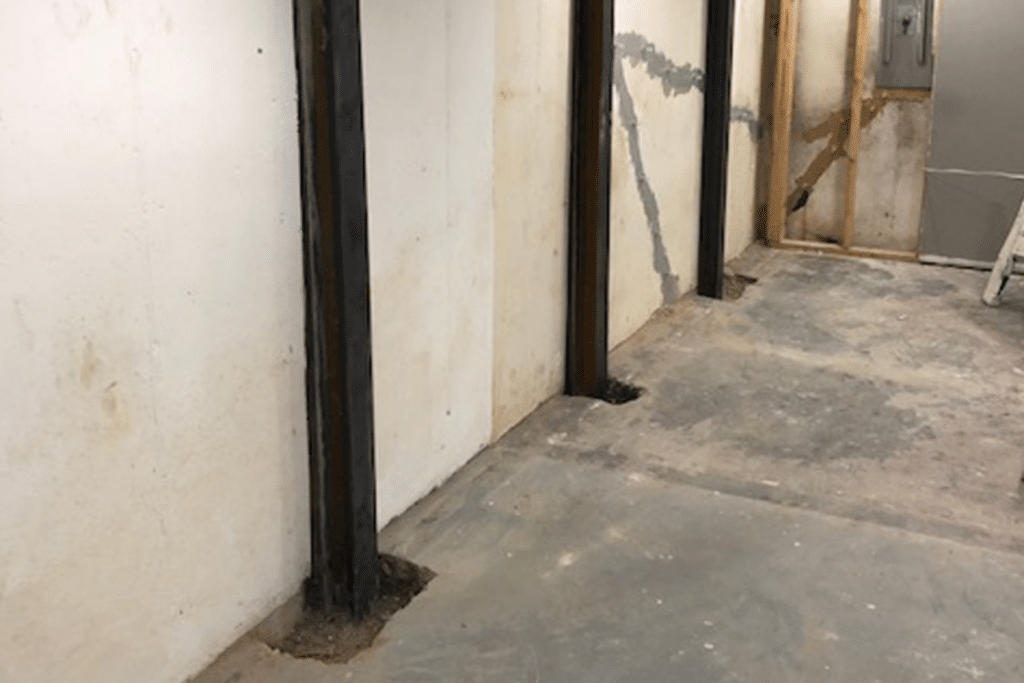
A bowing basement wall can be stabilized, and the method depends on the wall. For walls pushed in by pressure from expansive clay or saturated soil, we use steel wall plate anchors: an interior steel plate connected by a rod to an anchor in stable soil away from the foundation. That connection resists further inward movement and may allow some adjustment when the wall and site conditions permit. Alternatives include carbon fiber reinforcement for suitable walls with limited movement or early horizontal cracking, steel I-beam supports or soldier beams where exterior access is limited, and helical wall tiebacks for walls that need substantial lateral support. Our page on bowed wall repair in St. Louis explains each method.
We choose based on how far the wall has moved and in what pattern, whether it is block or poured concrete, soil conditions, room to work outside the wall and the overall condition of the foundation. When stabilization alone is not enough, realignment or more extensive structural repair may be needed. Our first goal is to stop further movement. Straightening is a separate decision, because forcing an older wall back to its original position can create additional stress or damage. Keep in mind that a wall held firmly in place can still let water in if the water source is still there.
How We Decide the Order of Repairs
Every foundation inspection we do looks at the structure and the water conditions together, because a plan built on only one side can miss the other problem. On the structural side, we check the location and pattern of cracks, bowed or leaning walls, how far the wall is displaced and whether that displacement is concentrated in one area, stair-step cracking in masonry, floor elevation differences, sticking doors and windows, and signs of earlier settlement. On the water side, we look at grading, gutters and downspouts, drainage conditions, soil saturation, basement seepage and where water collects around the foundation.
History matters as much as what we see that day. We ask whether cracks have widened, whether movement changes from season to season, whether seepage follows heavy rain and whether earlier drainage or foundation repairs have been done. The plan rests on how the wall has behaved over time, not on the time of year we happen to visit.
Homeowners often ask how much bowing is acceptable. We do not use a single crack width, deflection or floor elevation number that automatically triggers a repair. The same measurement can mean different things depending on whether the wall is still moving, where the displacement is concentrated, what the wall is made of and what the soil and site look like. Most homes then land in one of three outcomes.
Water management only. When water is coming in and the wall shows no movement, the plan focuses on water. Exterior drainage corrections may be enough when downspouts, poor grading or concentrated runoff are sending water toward the foundation. Interior perimeter drainage and a sump system are more commonly the answer when groundwater keeps entering at the wall-floor joint or beneath the slab.
Stabilization only. When a wall shows movement but the basement stays dry and the site drains well, the wall needs structural support and the water side may need no work at all.
Both. When a wall is moving and water is getting in, we prioritize stabilizing the wall rather than relying on drainage to correct movement that has already happened, and we plan the water management from the same inspection. Walls that need more extensive correction may call for exterior excavation and controlled wall realignment. Your written plan should cover both the structure and the water so neither problem turns up after the other repair is finished.
What Changes the Cost When You Need One Repair or Both
Cost depends on the mix of work, so the price drivers tell you more than a number from someone else’s house:
How long the affected wall is and how many walls need wo
Which stabilization method fits (carbon fiber, plate anchors, steel beams or tiebacks)
Access outside the wall
Partial or full-perimeter drainage
Whether the home needs a new sump pump, a battery backup or both
How many cracks need repair
Finished walls, flooring or built-ins that must be removed and replaced
Our plate anchor installations are backed by our Lifetime of Structure Warranty. The written warranty for the work sets the specific coverage, conditions and exclusions, so read it before comparing proposals.
The order of work affects cost too. If a wall that is still moving gets waterproofed or finished first, the structural repair that follows may mean opening up areas that were just completed. Not every wet basement has a moving wall, so treat this as a reason to get both questions answered before spending money, not a reason to assume the worst.
Before You Pay for Either Repair
If you see a wall that bows or leans, a horizontal or stair-step crack, or water coming in near a cracked wall, write down when you first noticed it, whether the crack has changed and whether water shows up after heavy rain. That history helps separate a water issue from a movement issue. If a company offers only one kind of repair, ask how it ruled out the other. Our team can inspect your basement and tell you whether it needs water management, wall stabilization or both, and in what order, before you commit to either.