
Street Creep Repair in St. Louis, MO
Street creep can squeeze the space between your driveway, garage floor, and foundation. As concrete moves toward the home, that pressure may cause cracking or push walls inward. Identifying where the movement begins helps determine which repairs your property needs.
At Perma Jack of St. Louis, we inspect the pavement and the structure together. Our street creep solutions include an engineered EPDM rubber expansion joint to help reduce transferred pressure and steel plate anchors when damaged foundation walls need stabilization. Some homes need both types of work.
An inspection can help you understand the movement before additional damage develops.
Professional Street Creep Solutions
The repair should account for the condition of the driveway and any damage to the home. We evaluate the joints, concrete slabs, garage, and foundation before recommending pressure relief, wall stabilization, or both. An expansion joint creates room for pavement movement; it does not repair existing cracks or restore a displaced wall by itself.
Our street creep services may include:
Driveway and slab inspections
Expansion joint evaluation
Concrete cutting and opening preparation
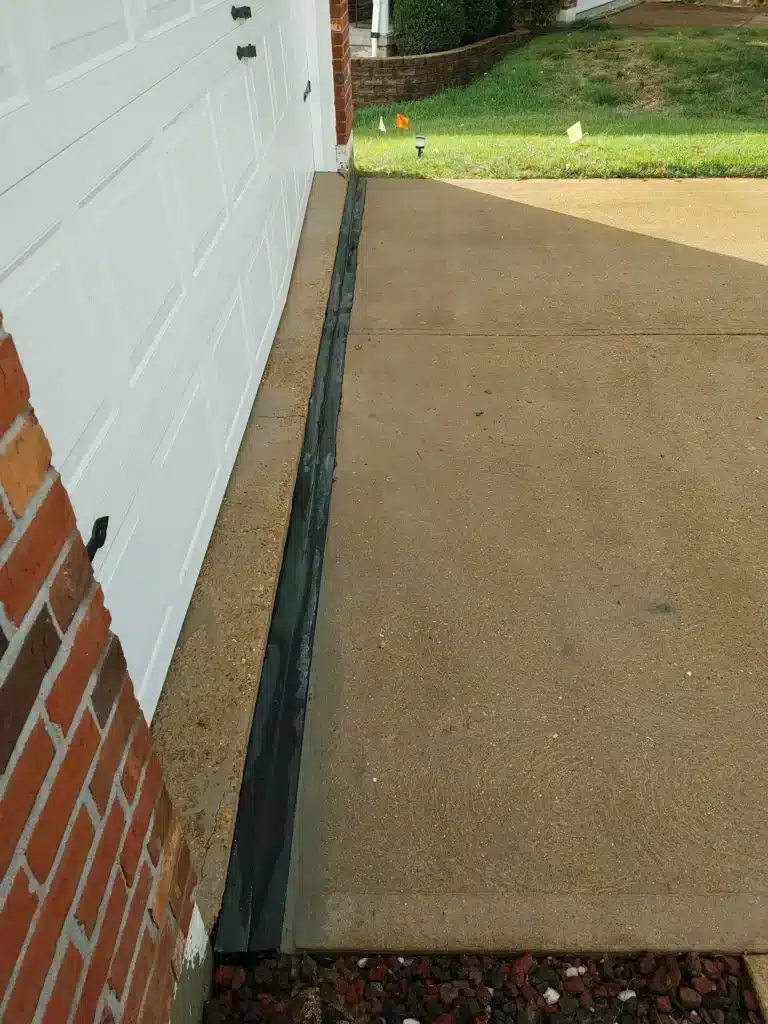
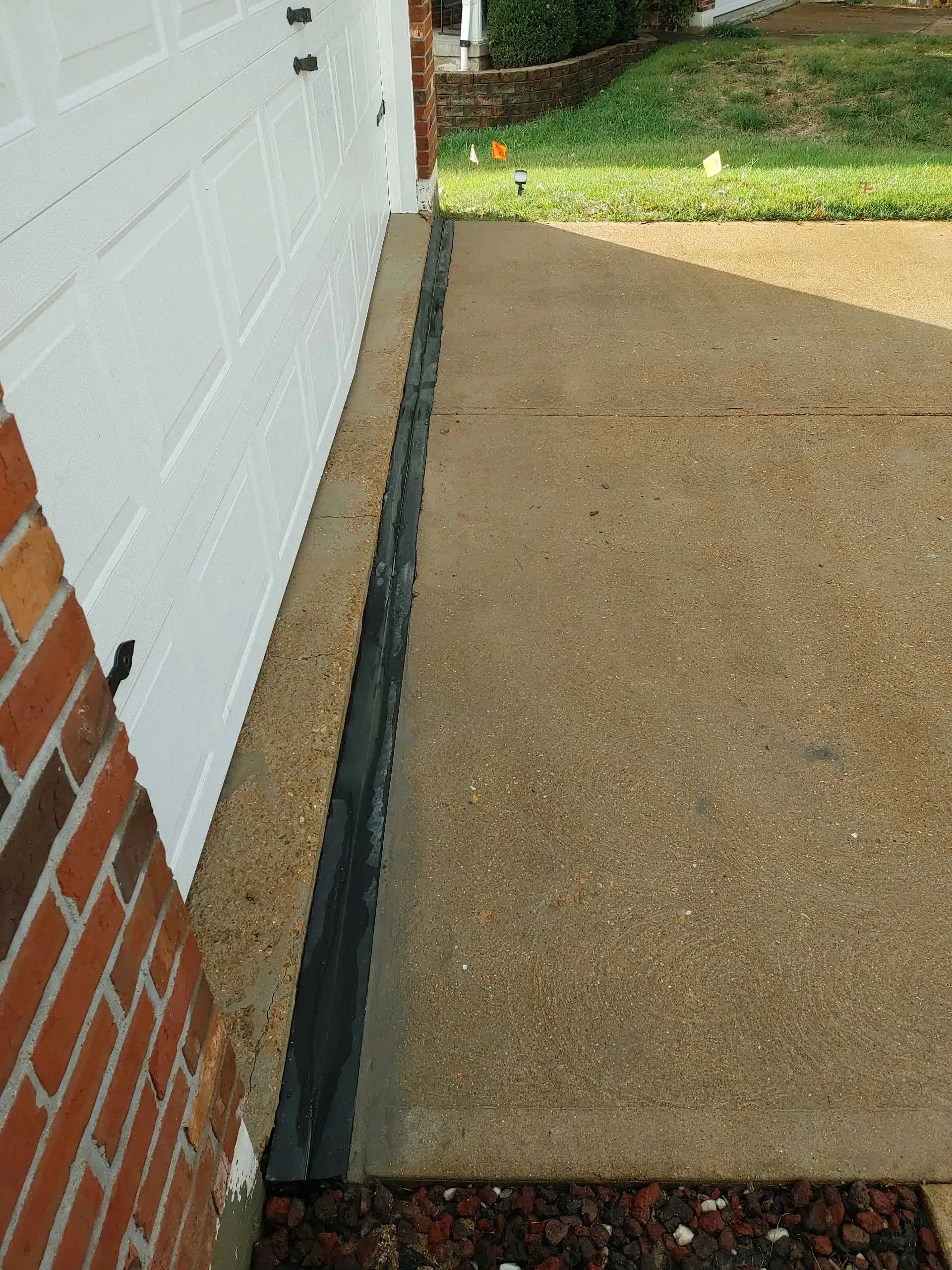
Engineered EPDM joint installation
Horizontal movement assessment
Garage wall inspections
Foundation crack evaluation
Steel plate anchor stabilization
Looking for Street Creep Repair in St. Louis?

What Is Street Creep?
Street creep describes pavement movement that transfers pressure toward a building. Concrete expands as it warms and contracts as it cools. Over repeated cycles, movement and closing joints can leave adjoining slabs with too little room to expand.
Pressure may travel from the roadway through the driveway and garage slab toward the foundation. Conditions that deserve attention include cul-de-sacs, curved streets, T-shaped intersections, lower ends of sloped streets, long driveways, and joints that are missing or tightly compressed. These conditions warrant inspection but do not establish the cause of damage on their own.
Properly functioning expansion joints allow room for movement between concrete sections. Once that space is used up or blocked, pressure may reach the garage and foundation.
Signs of Street Creep Around Your Home
Look for changes in the driveway and garage together.
A closed joint becomes more meaningful when it appears with slab displacement, nearby cracking, or wall movement.
A single crack or sticking door needs a broader evaluation before it is attributed to street creep.
Fully compressed expansion joints
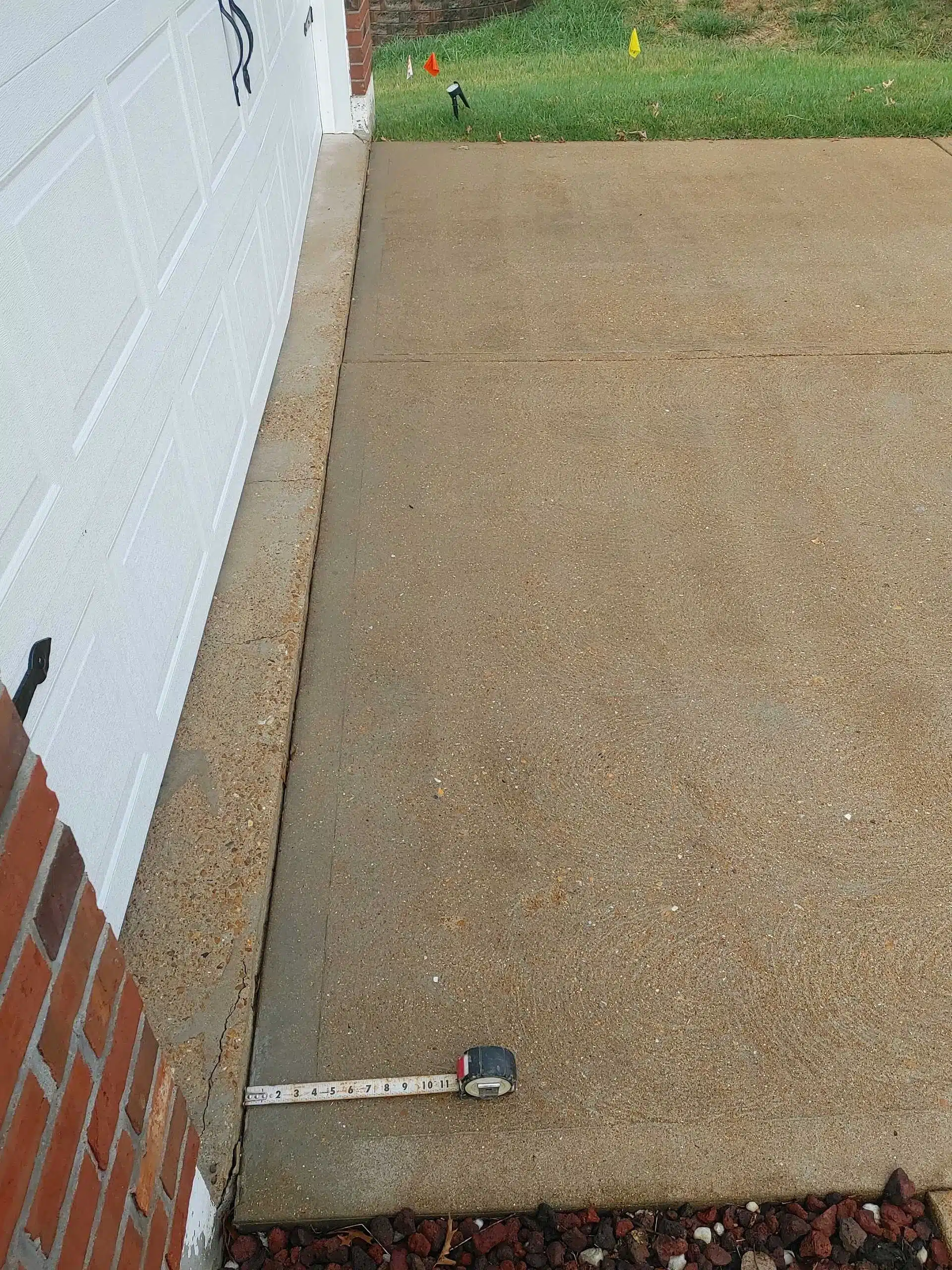
Driveway slabs pressing against the garage
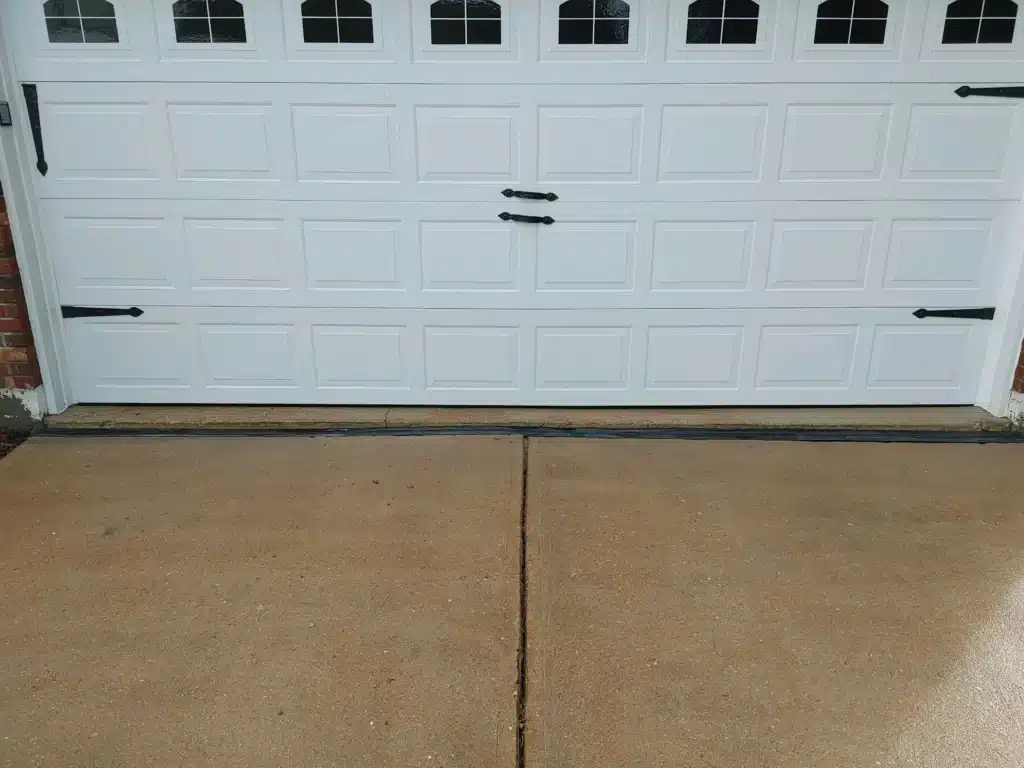
Cracks beside the garage door
Brick or masonry cracking near the driveway
Garage walls shifting or bowing
Gaps forming behind foundation walls
Cracks where exterior slabs meet the home
Interior drywall cracks near the garage
Garage doors becoming difficult to operate
Concrete slabs lifting, shifting, or crowding one another
Cracks that change over time or occur with displaced concrete deserve attention.
Read about when a foundation crack signals a serious structural problem.
Why Street Creep Is Common in St. Louis
Seasonal temperature changes make room for concrete movement important in the St. Louis area. Roadway layout, long runs of pavement, and the condition of the joints can influence where pressure is transferred. We consider these conditions alongside the direction and location of structural damage.
Long Runs of Concrete
Long stretches of roadway, sidewalk, and driveway can transmit movement through adjoining slabs. We look at the path between the pavement and the home rather than evaluating one crack in isolation.
Compressed Expansion Joints
A joint with little remaining compression space offers less room for additional movement. Its width, condition, and contact with adjoining concrete help us assess whether pressure may be transferring toward the garage.
Curved Streets and Cul-de-Sacs
Curves and cul-de-sacs deserve attention because adjoining pavement can direct movement toward nearby properties. Street layout is one part of the inspection, not proof that a home has street creep.
Driveways Aligned With Intersections
At a T-shaped intersection, the alignment of the roadway and driveway may help explain the direction of movement. We compare that alignment with conditions at the garage and foundation.
Seasonal Temperature Changes
Temperature changes can contribute to pavement movement, while cold-weather conditions may also affect foundations through other mechanisms. The pattern of damage helps separate these possible causes.
Learn more about how winter weather affects foundations in St. Louis.
Why Street Creep Should Be Repaired Early
An early evaluation can help identify pressure transfer before damage becomes more extensive. We check which joints have closed, which slabs may be transmitting movement, and whether garage or foundation walls have shifted. The findings help determine whether driveway work alone is appropriate or structural reinforcement is also needed.
A repair should address the source of pressure and the condition of the affected structure. Relieving driveway pressure does not erase existing structural damage. When both problems are present, the repair plan should account for both.
How We Repair Street Creep
Our System Design Specialists evaluate the driveway, garage, and foundation as a connected system.
The installation opening and repair details depend on the property. We select the joint location and opening dimensions after evaluating the property.
Inspect the Driveway and Foundation
We evaluate the street, sidewalk, driveway, garage floor, existing joints, visible foundation, and the location and direction of damage.
Measure the Joints and Movement
We check joint width and remaining compression space, differences in slab elevation, wall displacement from plumb, crack width and direction, and contact between the garage floor and foundation wall. Measurements over time can help show whether movement is continuing.
Evaluate Structural Damage
We assess cracking, bowing, masonry displacement, and other movement. We also consider settlement, expansive soils, hillside pressure, and ordinary building movement before selecting a repair.
Cut and Prepare the Opening
We determine the appropriate location and dimensions, cut and remove a properly sized section of concrete, and prepare the opening for the engineered joint.
Install the Engineered EPDM Joint
We install a seamless, extruded EPDM rubber expansion joint designed for approximately 3 inches of horizontal compression while maintaining a continuous rubber seal and providing vertical support. The system does not require adhesives or sealants for installation.
Address Foundation Wall Movement
When walls need stabilization, steel plate anchors can help support affected foundation walls and resist further inward movement. We evaluate whether this work is needed in addition to the driveway joint.
Review the Work and Monitoring
We explain the completed work, remaining concerns, and areas to watch. Changes in cracks, joints, slab elevations, or wall position can help guide follow-up evaluation.
The EPDM system provides a purpose-designed compressible rubber joint rather than relying on ordinary foam filler, backing rod, or a bead of urethane sealant. Its approximately 3-inch compression capacity is an engineered product characteristic, not the width of concrete removed or a guarantee that every installation can safely accommodate that amount of movement. The opening must be sized and prepared for the specific installation.
Street Creep and Garage Wall Damage
Pressure reaching the garage may affect more than the driveway surface. Cracks around the garage opening, displaced brick or block, bowed walls, gaps beside framing, and a garage door that no longer operates normally may appear together. The location and direction of these changes help us evaluate how force may be moving through the structure.
Have the movement evaluated before covering a crack. Wall crack repair may be part of the work, but sealing alone does not stabilize a wall that continues to move. Displacement in any direction deserves evaluation; inward movement is especially relevant when pavement pressure is being transferred toward the foundation.
Street Creep and Bowed Walls
A foundation wall that has cracked, bowed, or moved inward may need structural stabilization after driveway pressure is addressed. Steel plate anchors help stabilize the affected wall and resist additional inward movement. The recommendation depends on the wall condition and the complete pattern of damage.
Driveway pressure relief and wall stabilization serve different purposes. Some properties need both. Learn about bowed wall repair and how a structural evaluation guides the repair approach.
Street Creep and Foundation Settlement
Street creep involves horizontal pressure transferred through pavement. Foundation settlement involves a loss or change in support beneath the foundation and may produce vertical movement. Both can occur at the same property, and symptoms such as uneven floors, cracks, or sticking doors can overlap.
We consider possible foundation settlement when evaluating the full pattern. Expansive soils, hillside pressure, and ordinary building movement may also contribute. A door that binds without related cracking or floor displacement may have an isolated door problem.
Piers are not the answer to every foundation concern. See examples of foundation repairs that did not involve piers.
How We Compare Possible Causes
| Condition | Typical Indicators |
|---|---|
| Street creep | Compressed driveway expansion joints, displaced garage floors, horizontal movement toward the home, cracks near garage foundation walls, and inward movement of walls connected to the garage. |
| Expansive soil or hillside pressure | Horizontal or stair-step cracks in below-grade walls, inward bowing, and displacement concentrated along soil-retaining foundation walls. |
| Foundation settlement | Stair-step masonry cracks, diagonal cracks near windows or doors, uneven floors, and measurable vertical displacement. |
| Isolated door problem | Door binding without corresponding foundation cracks, floor displacement, or other evidence of structural movement. |
These are common indicators, not guaranteed diagnoses. Multiple causes can exist at one property. Horizontal foundation cracks may result from street creep or soil pressure; the location of the affected wall and evidence of pavement movement are often more informative than crack direction alone.
Municipal Responsibility for Street Creep
Responsibility depends on the municipality, roadway ownership, public or private maintenance, joint location, and applicable ordinances. Homeowners generally maintain private driveways, while public agencies commonly maintain public roads and rights-of-way. Responsibility for sidewalks, driveway approaches, expansion joints, and structural damage can vary.
If publicly maintained pavement may be contributing, contact the appropriate Public Works Department. Wentzville describes an inspection process and qualifying driveway joint replacement at no charge. Valley Park publishes a street creep request form for a courtesy asphalt repair. O’Fallon publishes driveway joint requirements, and Foristell addresses prevention responsibilities in its development standards. These local examples do not establish eligibility for any particular property or promise reimbursement for foundation damage.
Expansion Joints and Ongoing Maintenance
Watch for joints that have closed again, loose or damaged joint material, new concrete cracks, and concrete pressing against the foundation. Water entering through an open joint or changes at the garage also deserve attention. Report changes so the joint and surrounding structure can be evaluated together.
The engineered EPDM joint described here does not require installation adhesives or sealants. Other existing conventional joints on the property may have sealant that can deteriorate. Follow the maintenance guidance for the specific installed system rather than assuming every joint needs the same treatment.
Why Choose Perma Jack of St. Louis?
We evaluate how pavement movement relates to the garage and foundation before recommending repairs. Our approach combines an engineered EPDM joint for pressure relief with steel plate anchors when affected walls need stabilization. It also includes considering other causes that may explain the damage.
Our System Design Specialists assess the direction, location, and pattern of movement. We explain why a particular repair fits the findings and whether the property may need both driveway work and structural stabilization. Contact us to discuss the conditions at your home or commercial property.
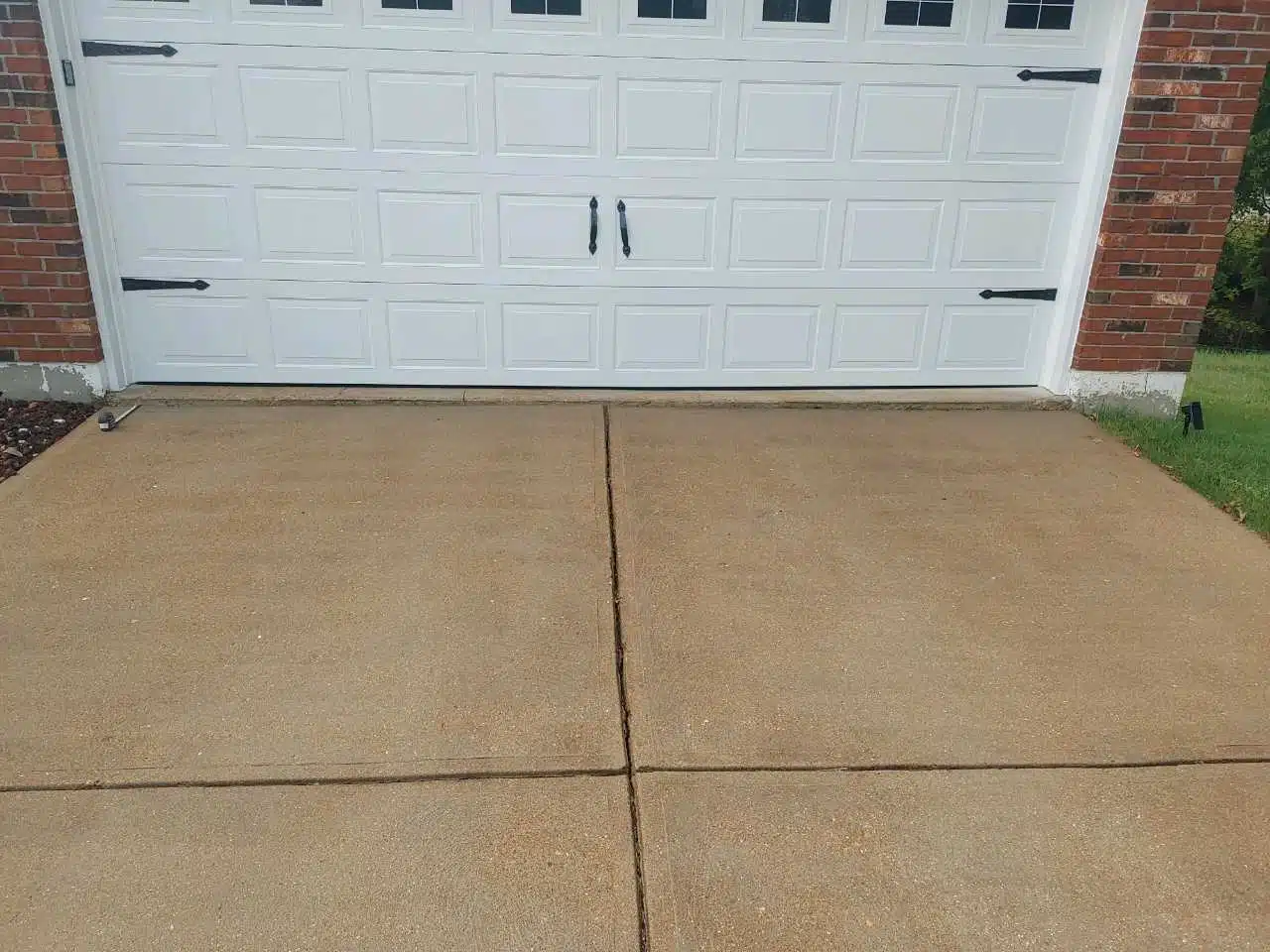
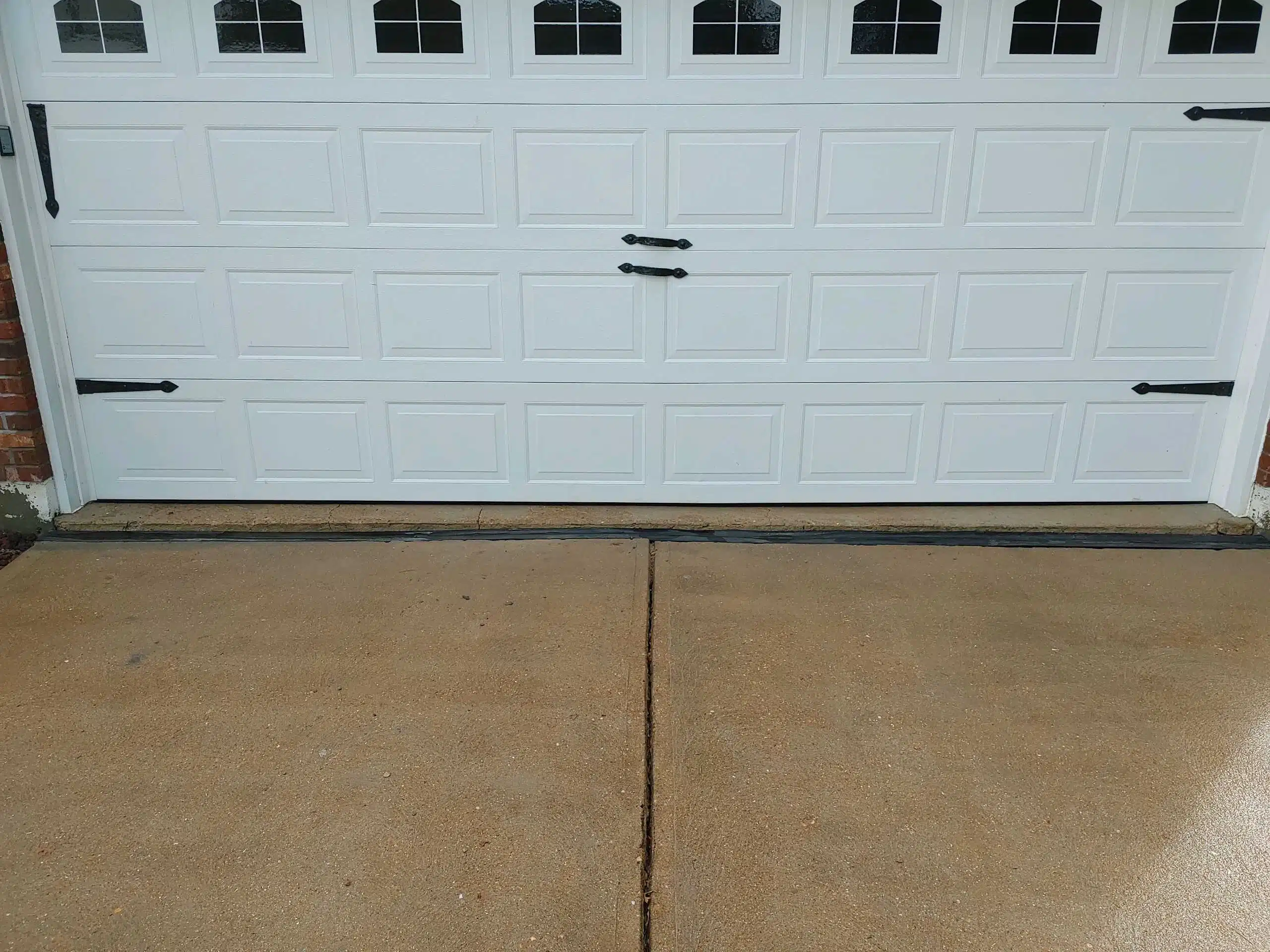
Street Creep Gallery
Schedule a Street Creep Inspection
If your driveway joints are closing or your garage and foundation are showing signs of movement, schedule an evaluation. We will inspect the connected areas, discuss possible causes, and explain which repairs may be appropriate. The plan may include pressure relief, structural stabilization, or both.
Call 636-225-2553 or use our contact form to request an inspection in the greater St. Louis area.