

What We’ve Learned About Foundation Problems in Historic St. Louis Homes
St. Louis is home to some of the most beautiful historic neighborhoods in the country. From the brick homes of Soulard and Benton Park to the stately residences in Lafayette Square, Shaw, Webster Groves, and the Central West End, many homes throughout our region have been standing for well over 100 years.
One of the first things we tell homeowners is that older homes shouldn’t be judged by the same standards as new construction. A crack in the wall or a floor that’s slightly out of level doesn’t automatically mean the home has a serious structural problem. In many cases, these homes have experienced decades of gradual settlement and seasonal movement while remaining structurally sound.
After inspecting historic homes throughout the St. Louis area, we’ve learned that understanding how these homes were built is just as important as understanding the foundation problems homeowners see today.
Historic Homes Were Built Very Differently
Many of St. Louis’ historic homes were constructed long before modern foundation waterproofing systems, engineered fill soils, and today’s building practices became standard.
Older homes often feature solid masonry construction, thick brick walls, stone or early concrete foundations, and lime mortar that behaves differently than modern mortar. These materials have performed remarkably well over the last century, but they also age differently than newer construction.
Because of that, it’s important to evaluate an older home within the context of its age instead of expecting it to look like a home that was built ten years ago.

Not Every Crack Means the Foundation Is Failing
One of the biggest misconceptions we hear is that every crack in an older home requires immediate structural repair. The reality is much more nuanced. Many of the historic homes we inspect have cracks that have existed for decades without significant change. In those cases, the crack is often evidence of historic settlement rather than active structural movement.
The question isn't simply, "Is there a crack?"
The better question is, "Is the home still moving?"
That's why we spend far more time understanding the overall performance of the home than focusing on one individual crack.
Brick Homes Tell a Story
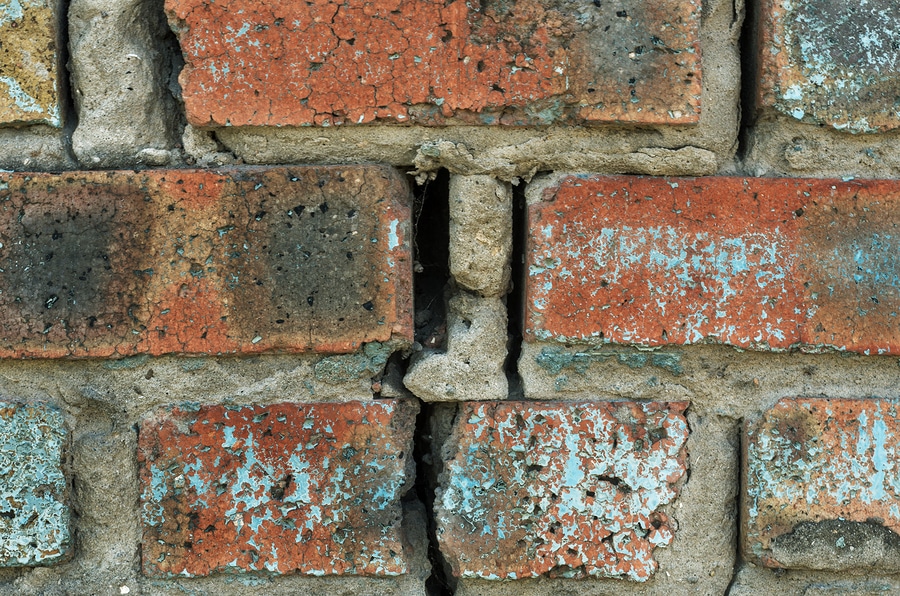
One thing that makes St. Louis unique is the number of historic brick homes throughout the region. Brick is incredibly durable, but the mortar joints between the bricks are often designed to accommodate small amounts of movement. As a result, stair-step cracks or deteriorating mortar joints don’t always indicate a major structural problem.
During our inspections, we’re looking at much more than the crack itself. We’re evaluating whether the crack has displaced the brick, whether it’s continuing to grow, and whether other parts of the home show similar signs of movement.
Sometimes the mortar is simply showing its age. Other times, it’s telling us that the foundation needs a closer look.

Moisture Is Often a Bigger Concern Than Settlement
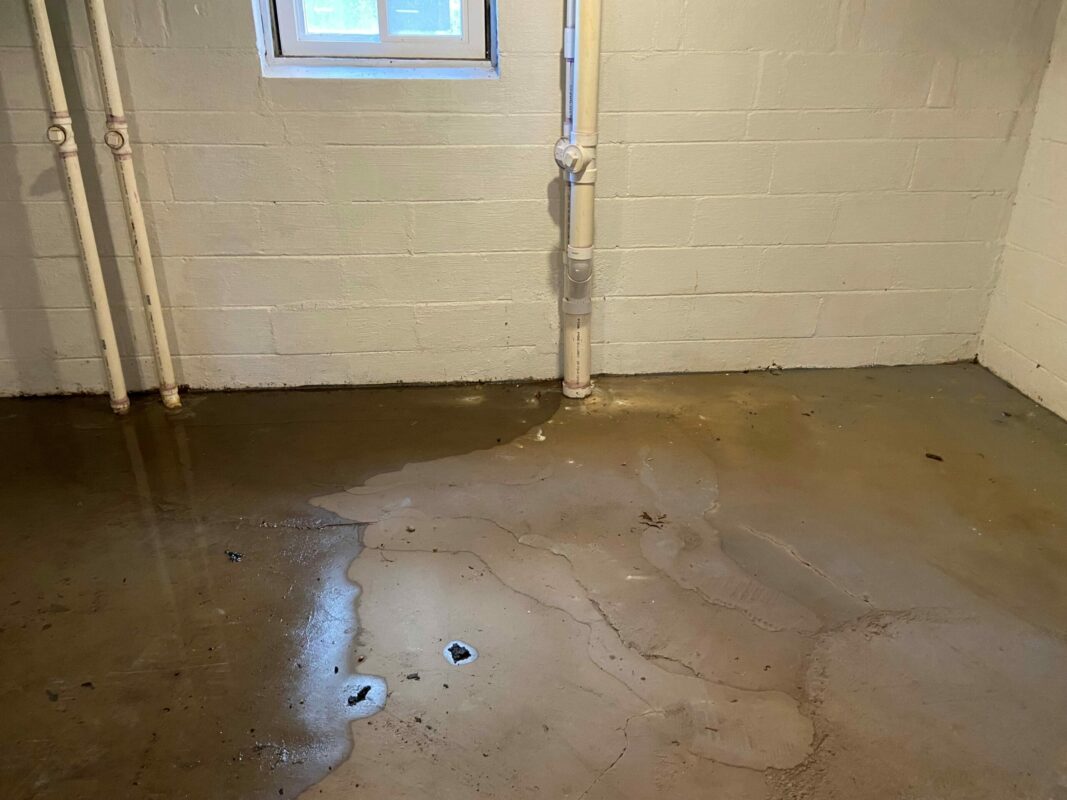
Many historic homes were built before modern waterproofing methods became common. Over the years, we've found that water intrusion is often a larger concern than the amount of settlement itself. Aging drain tile systems, deteriorated mortar, changing grades, and decades of landscape modifications can all allow water to collect around older foundations.
That moisture doesn't just create basement leaks. It also changes how the surrounding soil supports the home, which can contribute to ongoing settlement or foundation movement. In many cases, improving drainage around the home is just as important as repairing the visible foundation damage.

Additions Can Change How an Older Home Performs
Very few historic homes remain exactly as they were originally built. We’ve inspected homes where kitchens were expanded, porches were enclosed, garages were added, or multiple additions were completed over the decades. Each of those projects changes how loads are distributed through the structure and how water moves around the property.
It’s not uncommon for us to find that the original portion of a home has remained remarkably stable while a newer addition has experienced settlement because it was built on different soils or under different construction standards.
Looking at the home’s history often helps explain why movement has occurred in one area but not another.
Every Historic Home Needs to Be Evaluated Differently
One of the reasons we enjoy working on older homes is that no two are exactly alike. Every repair, renovation, drainage improvement, and addition tells part of the home’s story. Understanding that history is an important part of understanding how the home is performing today.
Rather than assuming every crack needs structural repair, we evaluate the home as a complete system. We look at drainage, grading, foundation walls, settlement patterns, previous repairs, moisture conditions, and the age of the structure before making recommendations.
That approach often gives homeowners a much clearer understanding of what requires attention and what has simply become part of the home’s history.
Preserving Historic Homes
Owning a historic home comes with a responsibility to preserve it for future generations. That doesn’t mean ignoring foundation problems, but it also doesn’t mean overreacting to every crack or sign of settlement. The goal is to understand how the home has performed over the last century and address issues that could affect its long-term stability while preserving the character that makes these homes so special.
After inspecting historic homes throughout the St. Louis area, we’ve learned that thoughtful evaluations almost always lead to better repair decisions than assumptions based on appearance alone.
Contact Us For Historic Home Foundation Repair & Waterproofing in St. Louis
If you own a historic home and have questions about foundation cracks, basement moisture, settlement, or structural movement, the team at our team can help.
We’ve worked with homeowners throughout St. Louis and the surrounding communities to evaluate older homes, identify the causes of foundation problems, and recommend repairs that protect both the structure and its history. Contact us today to schedule a professional foundation inspection.