

Google Reviews Perma Jack of St. Louis
BBB A Rated

Call Us Today

Why Do Foundation Problems Get Worse During Missouri Summers?

Many homeowners expect to find foundation problems after a season of heavy rain. What often surprises them is that some of the most significant movement happens during the hottest, driest months of the year.

Throughout the St. Louis area, it’s common for homeowners to notice new foundation cracks, sticking doors, uneven floors, or widening gaps around windows during the summer. While these issues may seem to appear overnight, they’re usually the result of changes taking place beneath the home as the soil dries out.

At Perma Jack, we’ve inspected thousands of homes across St. Louis and the surrounding communities. One pattern we see year after year is that extended periods of hot, dry weather can have a significant impact on foundations because of the clay soils that are common throughout our region.

Missouri's Clay Soils Constantly Change

Much of the St. Louis area is built on expansive clay soils. Unlike sandy soils that allow water to move through them relatively easily, clay behaves more like a sponge. It expands when it absorbs moisture and shrinks as it dries out.

These changes happen naturally throughout the year, but they’re often most noticeable during the summer when prolonged heat and a lack of rainfall cause the soil to lose moisture.

As the clay shrinks, it also loses volume. That means the soil supporting your foundation may no longer provide the same level of support it did just a few months earlier.

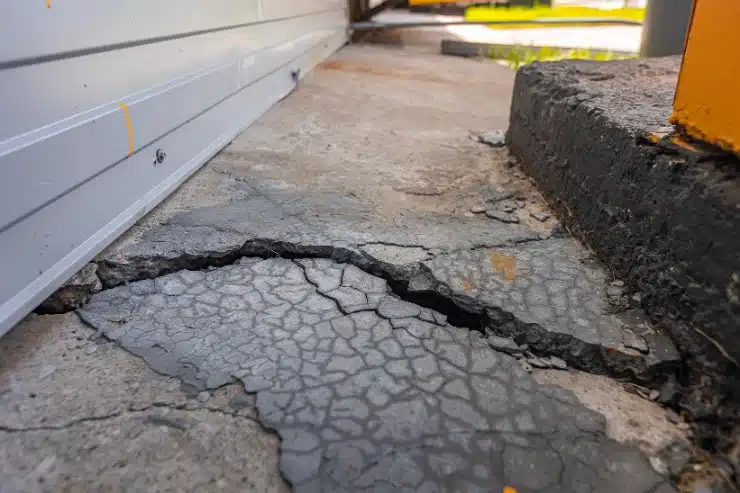
Cracks in the foundation

Soil Can Pull Away From Your Foundation

One thing we commonly notice during foundation inspections in the summer is that the soil has actually pulled away from the foundation.

Homeowners sometimes see a gap between the landscaping and the side of the house and assume the foundation has moved outward. In reality, it's usually the opposite. The soil has dried out, contracted, and pulled away from the foundation wall.

Those gaps are often one of the first visible signs that moisture levels in the soil have changed significantly.

While the gap itself isn't necessarily the problem, it tells us the supporting soils are behaving differently than they were during the wetter months of the year.
Dry Soil Can Lead to Foundation Settlement

When clay soils shrink, they don’t just move away from the foundation walls. They can also lose some of their ability to evenly support the weight of your home.

If portions of the foundation lose support while other areas remain stable, the home may begin to settle unevenly. This is known as differential settlement, and it’s one of the most common causes of structural movement we see throughout the St. Louis region.

As settlement occurs, homeowners may begin noticing new drywall cracks, stair-step cracks in brick, sticking doors and windows, or floors that no longer feel level.

These symptoms often appear gradually, but a particularly dry summer can make them much more noticeable.

Trees Can Make Dry Conditions Worse

Large trees are another factor we consider during many foundation inspections. Mature trees require a tremendous amount of water during the growing season. Their root systems can draw moisture from the surrounding soil, causing certain areas around a foundation to dry out faster than others..

We've inspected many homes where one corner of the foundation experienced significantly more settlement because nearby trees were removing moisture from the soil during extended dry periods. That doesn't mean trees should always be removed, but they can certainly influence how the soil behaves around your home.


Summer Cracks Don't Always Mean New Damage

A question we hear frequently is, “Why did this crack suddenly appear?” In many cases, the movement didn’t happen overnight. The home may have been experiencing gradual settlement for months or even years, and the dry summer simply made the changes more noticeable.

Likewise, some cracks may appear to become smaller during wetter months as the surrounding clay expands again. While that can make the symptoms look better, it doesn’t necessarily mean the underlying structural issue has been resolved.

That’s why we recommend evaluating the cause of the movement rather than judging the condition of the home based on how the cracks look during a particular season.

What Should Homeowners Watch For?

If you’ve experienced a particularly dry summer, it’s a good idea to keep an eye out for changes around your home, including:

New or widening
foundation cracks

Stair-step cracks
in brick or masonry

Doors or windows
that begin sticking

Uneven or
sloping floors

Gaps between
walls and ceilings

Soil pulling away
from the foundation

These symptoms don’t automatically mean your home has a serious structural problem, but they do indicate that the foundation should be evaluated if the changes continue.

Not Every Summer Crack Requires Foundation Repair

It’s important to remember that seasonal movement is common in the St. Louis area because of our expansive clay soils. Some minor movement is expected, and not every crack requires structural repairs.

The key is determining whether the movement is within normal seasonal ranges or whether the structural movement is progressing beyond what the foundation was designed to accommodate. That’s one reason our inspections focus on identifying the cause of the movement rather than simply measuring the size of a crack.

Contact Us for Foundation Repair in St. Louis

If you’ve noticed new cracks, sticking doors, uneven floors, or other signs of foundation movement after a dry Missouri summer, the team at Perma Jack can help.

For decades, we’ve helped homeowners throughout St. Louis identify and repair foundation problems caused by the unique clay soils found across our region. We’ll inspect your home, determine whether the movement is seasonal or structural, and recommend the most appropriate solution for protecting your foundation for years to come.