
Push Piers vs. Helical Piers: Which Is Better for a St. Louis Home?
Neither push piers nor helical piers are better for every St. Louis home. Both systems can transfer structural loads away from unreliable upper soils, but they are installed differently and they fit different structural and site conditions. When we choose a pier system, we are looking at the weight and construction of the structure, the settlement pattern, access, bearing conditions, and what we are trying to accomplish with the repair.
That is why we do not think homeowners should choose a pier type before the foundation has been evaluated. We have used hydraulically driven steel push piers for foundation settlement work since 1974, and we also use helical piers where their installation method and load requirements make them a better fit. The right system is the one that matches the structure in front of us.
How Push Piers Work and Where They Fit
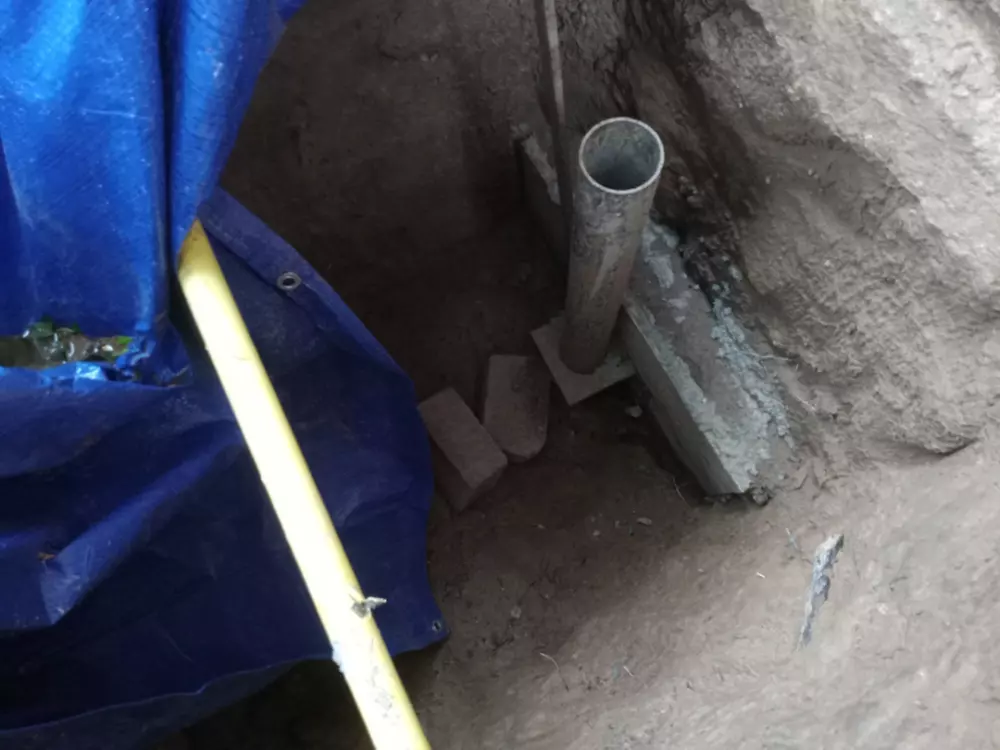
Push piers are steel piers that are hydraulically advanced beneath an existing foundation using the structure as reaction weight. As sections are added, the pier is driven through weaker upper soils until it reaches the resistance required by the repair design. The load of the foundation can then be transferred through the pier to more dependable bearing below.
This approach is often well suited to existing structures with enough weight to provide the reaction needed during installation. That can include many masonry and conventional residential foundations, but we do not select push piers simply because a house is brick or because it is old. The foundation condition, load, access, and settlement pattern still have to support the choice.
You can see how we use both pier systems within our foundation settlement repair services. The important point is that the pier is part of a larger repair plan, not a product selected from a menu before we know why the house is moving.
How Helical Piers Work and Where They Fit
Helical piers use steel shafts with helical plates that are rotated into the soil. The helices help advance the pier and provide bearing area for load transfer. Installation resistance and design requirements are used to determine whether the pier has reached the capacity needed for the structure being supported.
Helical piers can be useful where the structure is lighter, where access changes the installation approach, or where the repair involves an addition, porch, deck, garage, stair, or another load-bearing element that does not provide the same reaction weight as a heavier foundation. Those are common examples, not automatic rules. A helical system still has to be designed around the actual load and soil conditions.
The advantage of offering more than one system is that we do not have to force every settlement problem into the same repair. We can look at the site and choose the method that makes sense for the structure.
| Factor | Push Piers | Helical Piers |
|---|---|---|
| Installation method | Hydraulically advanced using the existing structure as reaction weight. | Rotated into the soil using helical plates on the shaft. |
| Structure weight | Often a good fit for heavier existing structures when adequate reaction is available. | Can be useful for lighter structures or loads where reaction weight is limited. |
| Capacity verification | Based on installation resistance and the repair design. | Based on installation resistance/torque and the repair design. |
| Access | Requires workable access at the footing and room for hydraulic installation. | Can fit some access or design conditions differently because of rotational installation. |
| Common use cases | Settling residential and commercial foundations. | Foundations, additions, porches, decks, garages, stairs, and other qualifying loads. |
| Primary goal | Transfer load to reliable bearing and stabilize the settled area. | Transfer load to reliable bearing and stabilize the supported structure. |
What Changes the Recommendation in St. Louis
St. Louis homes give us a wide range of structures to evaluate. We work on older masonry homes, postwar frame houses, additions built decades after the original foundation, garages, porches, and properties where previous repairs have changed how loads are carried. The pier that works well under one part of a property may not be the best system for another part.
Soil conditions also vary from site to site. Expansive or moisture-sensitive soils are common in the region, but we do not select a pier by assuming every property has the same soil profile or that every pier needs to reach the same depth. What matters is finding dependable bearing for the specific load and confirming that the installed system meets the repair requirements.
Access can be just as important. Utilities, patios, interior finishes, exterior hardscaping, neighboring structures, and the geometry of the foundation can all affect how we reach the footing and which installation method is practical.
Pier Type Is Only One Part of the Repair Goal
Homeowners often ask whether one pier system is better at lifting a house. We separate that question from stabilization because they are not the same goal. The first job of a pier system is to provide reliable support and stop the affected section from continuing to settle.
Whether some elevation can be recovered depends on the age and amount of settlement, the condition of the structure, and how the house responds during the repair. Our article on lifting versus stabilizing a settled foundation explains why we do not chase a perfectly level number if doing so would create unnecessary stress elsewhere in the home.
The same caution applies to cracks. Piers may address the movement that caused brick, foundation, or drywall cracking, but the visible cracks may still need separate repair after the structure is stabilized.
How We Decide Which Pier Goes Where
Our evaluation starts with the settlement pattern. We look at floor elevations, masonry cracks, foundation cracks, doors and windows, additions, previous repairs, and the history of the changes. We want to know whether the problem is active, where the movement is concentrated, and what portion of the foundation actually needs support.
If you are not sure whether the house is still changing, start with our guide on how to tell if a foundation is still moving. A crack that has looked the same for years is a different situation from a crack that is widening while the nearby floor continues to drop.
Once we confirm that piering is appropriate, the structure, load, bearing conditions, access, and repair objective determine the system. That is a much better basis for choosing between push and helical piers than trying to decide which product sounds stronger on paper.
Which Pier Is Better for Your Home?
If your St. Louis home has confirmed foundation settlement, the answer should come from the house and the site, not from a blanket preference for one pier. Push piers can be an excellent fit for many existing foundations with adequate reaction weight, while helical piers can be the better choice for lighter structures and certain access or design conditions. Both are tools for transferring loads to more reliable support.
At Perma Jack of St. Louis, we evaluate the movement first and then select the repair system that fits the structure. If you are seeing stair-step cracks, uneven floors, sticking doors, or other settlement symptoms, schedule a foundation evaluation with our team. We can determine whether piers are needed at all and, if they are, which system makes sense for your property.