
Do Sump Pumps Prevent Foundation Movement in Expansive Clay, or Will You Still Need Foundation Repair?
The Short Answer: A Sump Pump Manages Water, Not Soil Movement
A sump pump does not prevent foundation movement in expansive clay. It removes water collecting around and under a basement, which can relieve water pressure on the walls, but it cannot stop clay from swelling and shrinking or support a settling footing. Some homes need only water management, some need structural repair, and many need both.
What a Sump Pump and Interior Drain Actually Do
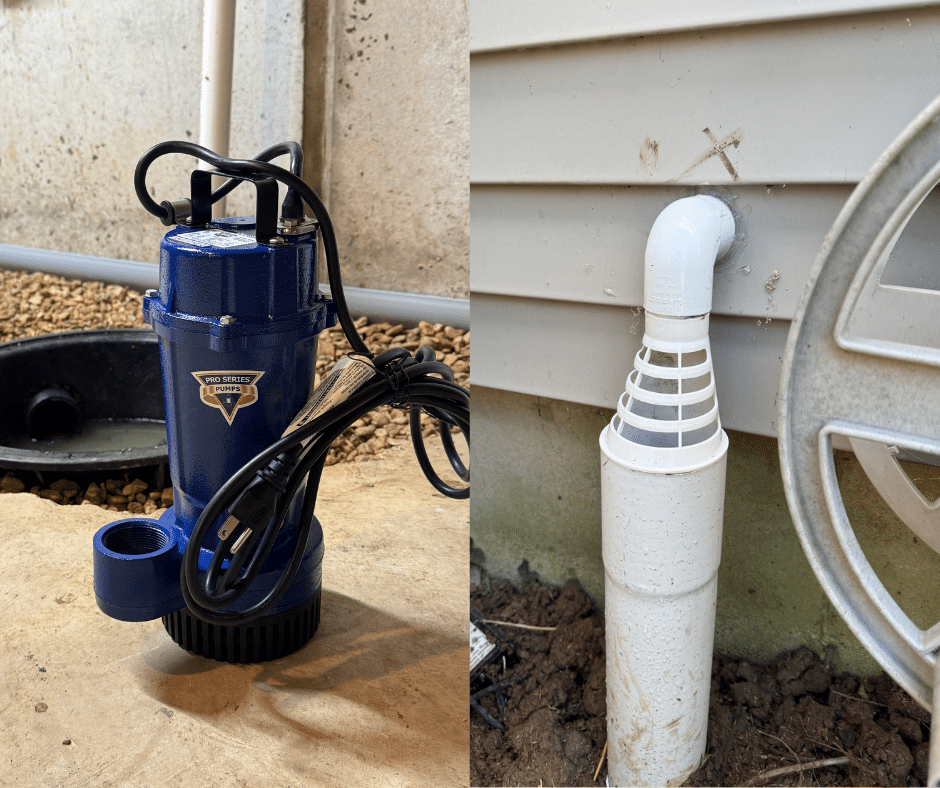
An interior perimeter drain, often called drain tile, carries groundwater from along the foundation to a sump pit, and the pump sends it out through a discharge line. That lowers hydrostatic pressure, the push of groundwater against walls and floors. A pump keeps a basement dry only while it runs, so power outages, pump failure and a discharge line that empties near the house are real limits. Pumps can be added to existing basements, and we install full-perimeter, partial and below-footer drainage along with battery backup pumps.
Why Expansive Clay Can Keep Moving Your Foundation Anyway
Expansive clay swells as it takes on moisture and shrinks as it dries. Swelling presses sideways on basement walls, which is called lateral soil pressure. Shrinking can leave parts of a footing with less support and lead to uneven, or differential, settlement. Clay is not behind every crack, but these wet and dry cycles explain how a working pump and a moving wall can share the same basement.
Is Your Problem Water, Movement or Both? Signs to Check
Seepage at the cove joint (where the wall meets the floor), damp walls and water after storms with no new cracking point mainly to water. Horizontal cracks, inward bowing, stair-step cracks in block, widening cracks, sloping floors and sticking doors point to movement. A pump that runs often while cracks keep growing usually means both. Our guide on how to tell if your foundation is still moving covers monitoring, and keep in mind that a driveway pushing on a garage wall, known as street creep, can move a wall with no water involved.
When Foundation Repair Still Makes Sense in St. Louis Clay
For walls pushed inward, foundation repair in St. Louis often means steel plate anchors, which connect an interior steel plate by a rod to an anchor in stable soil away from the foundation. They resist further inward movement and may allow some adjustment when conditions permit. Carbon fiber, steel beams or helical tiebacks suit other walls, and we stabilize a wall before considering any straightening. For settlement, foundation piers for settling footings carry the home’s weight through unstable upper soil to bedrock or another load-bearing layer. Both are backed by our Lifetime of Structure Warranty, with coverage set by the written warranty for the job.
When a Sump Pump Alone Is the Right Fix
A wet basement with no horizontal cracking, no bowing and no sign of active movement usually does not call for structural repair. Often the better first step is outside, with gutters, downspouts and grading, which our yard drainage solutions address. In Ballwin, a homeowner found new floor cracks after earlier pier work. The builder had never installed interior drain tile to carry groundwater to the existing sump buckets, so pressure built under the floor; once we added drain tile, the homeowner reported the problem was resolved.
How to Decide Your Next Step
Our inspections look at crack pattern, wall displacement, floor elevation, grading, gutters and where water collects. We also ask whether cracks have widened, whether movement changes with the seasons and what repairs came before. No single crack-width or deflection number decides the repair; the overall pattern does. When water and movement are both present, the order of the work matters too. If you have a pump and still see widening cracks, bowing walls or sloping floors, schedule an evaluation so we can sort out water, movement or both before choosing any system.